Project Description
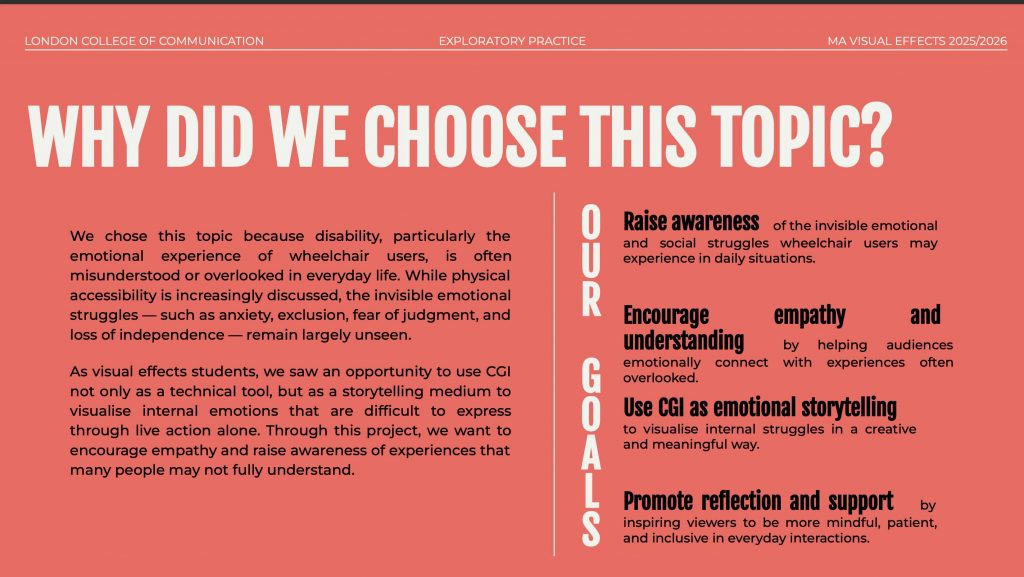
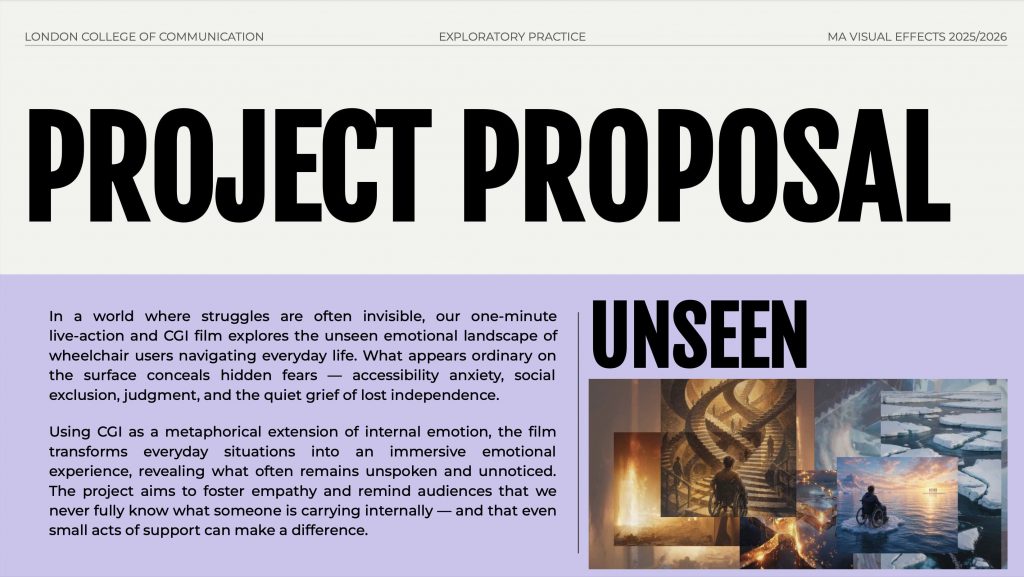
Unseen is a collaborative VFX short film created by a team of three as part of our MA Visual Effects course. The project combines live-action footage with a series of CGI environments to explore a social issue through a short narrative. The story follows a group of friends casually discussing their summer plans, while the conversation triggers a series of thoughts in the main character about situations she may experience differently as a wheelchair user.
The film moves between the real-world conversation and exaggerated digital environments that visualise these thoughts and concerns. Each environment represents a different situation or barrier, allowing the story to shift between an ordinary social moment and the internal experience of the main character. The project was developed collaboratively, from the initial concept and research through pre-production and filming to the creation of the CGI scenes and final film.
Meaning and Intent
When developing the concept, we wanted to focus on an issue that could be explored meaningfully through visual effects rather than using CGI purely for spectacle. We decided to focus on wheelchair users and some of the challenges they may experience in situations that, for other people, can seem completely ordinary.
A key idea behind the project was the difference between what we can see from the outside and what another person might actually be experiencing internally. Someone can be sitting with their friends and appear to be part of a normal conversation, while internally thinking about accessibility, travelling independently, navigating crowded spaces or whether they will be able to participate in the same experiences as everyone else.
This became the basis for the title Unseen. Rather than having the protagonist directly explain these concerns, we wanted to make them visible. The CGI environments transform thoughts and worries that would normally remain unseen into exaggerated physical spaces that the audience can experience alongside her.
Our intention was not to suggest that every wheelchair user has the same experiences, but to encourage people to consider barriers they may otherwise never think about. We genuinely cared about approaching the subject with empathy and respect and wanted the project to raise awareness while exploring how VFX can communicate experiences that cannot necessarily be seen from the outside.
Interviews
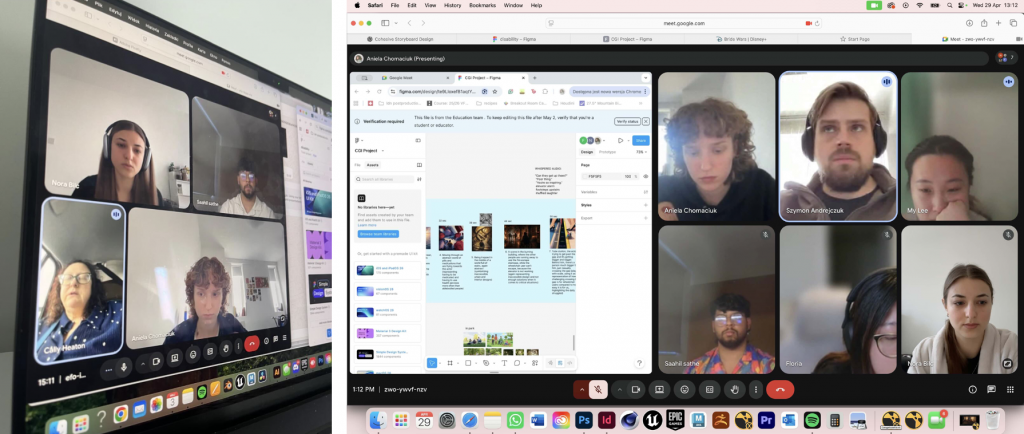
Once we had established the concept and what we wanted the project to communicate, we felt it was important to speak directly with people who had lived experience rather than relying on our own assumptions. We contacted Caroline Heaton and Szymon Andrejczuk, who are both wheelchair users, and arranged online meetings with them. Before the interviews, we prepared a series of questions to guide the conversations and help us better understand their perspectives.
We spoke about their everyday experiences, accessibility, situations they find particularly challenging, and some of the difficulties we may never have considered ourselves. We also shared our initial storyline and ideas with them, giving us the opportunity to receive feedback on whether the situations we wanted to portray felt appropriate and believable. We genuinely cared about the subject and wanted to approach it as thoughtfully and accurately as possible, so their input became a really valuable part of the development of the project.
The story
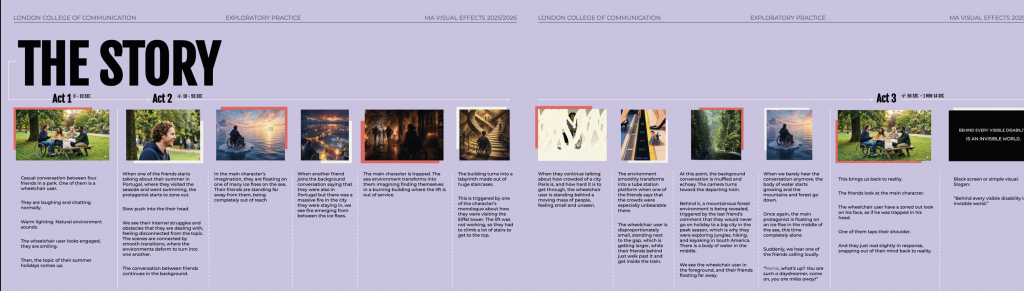
The film begins with four friends having a casual conversation about their plans for the summer. As they talk about travelling, holidays and different destinations, the protagonist, who is a wheelchair user, gradually becomes quieter and more distant from the conversation.
As each new situation is mentioned, the story leaves reality and enters a series of imagined scenarios. What begins as a discussion about Portugal transforms into a burning building, followed by increasingly difficult environments: an unstable staircase, a crowded public space, an inaccessible tube platform and an overgrown jungle. In each scenario, the protagonist is placed in a situation where her wheelchair makes navigating the environment increasingly difficult.
The film repeatedly moves between these imagined environments and the conversation between the friends, showing that although she is physically still sitting with them, her attention has shifted completely towards these thoughts. Towards the end, the story returns to reality and the conversation continues, while the protagonist remains noticeably affected by what has been going through her mind.
Below is our original storyboard and the script developed for the film.
Casting actors
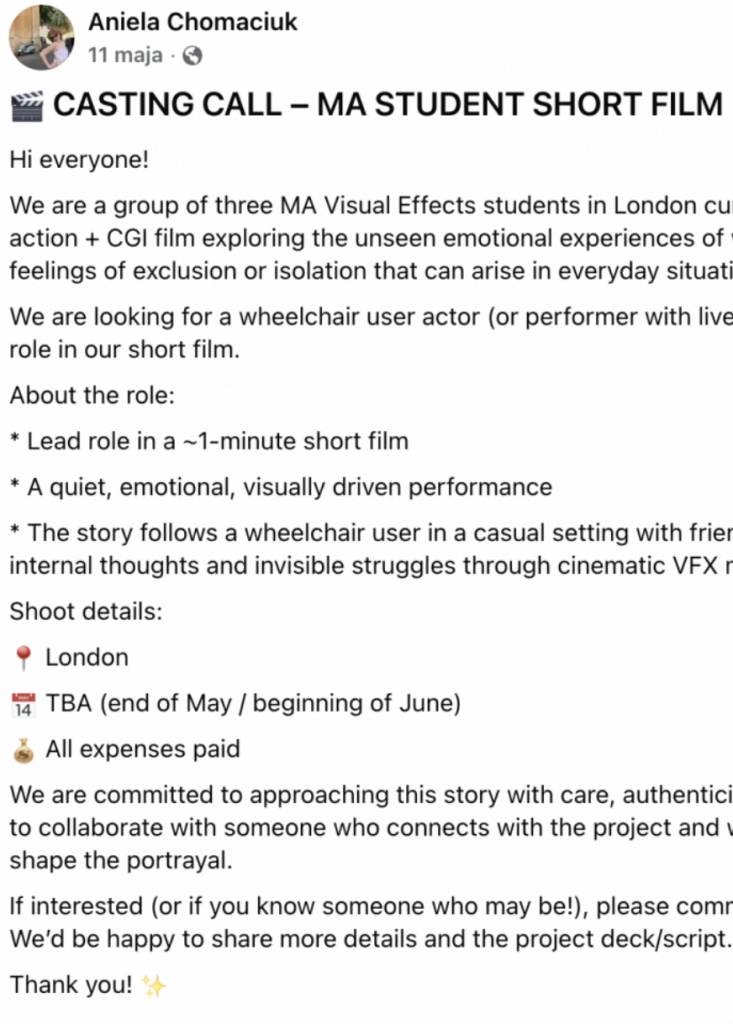
Because the story centred around the perspective of a wheelchair user, we felt it was important to cast someone who had lived experience rather than asking an actor to portray an experience they were unfamiliar with. This would also give us another opportunity to receive direct feedback and make sure we were approaching the subject respectfully.
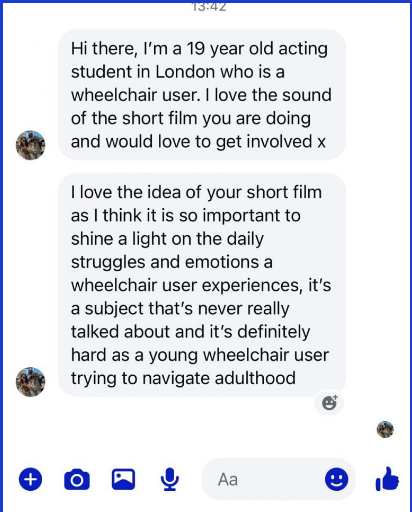
To find our lead actress, we created a casting call and shared it across multiple Facebook groups for actors, acting students and filmmakers based in London. Shortly afterwards, we were contacted by Talia, a 19-year-old acting student and wheelchair user who connected strongly with the concept and was interested in taking part. She also offered to involve three of her friends from acting school, which meant we were able to cast the full group of four friends needed for the live-action scenes. Our final cast consisted of Talia, Grazia, Emma and Eleanor.
Task Distribution and Project Timeline
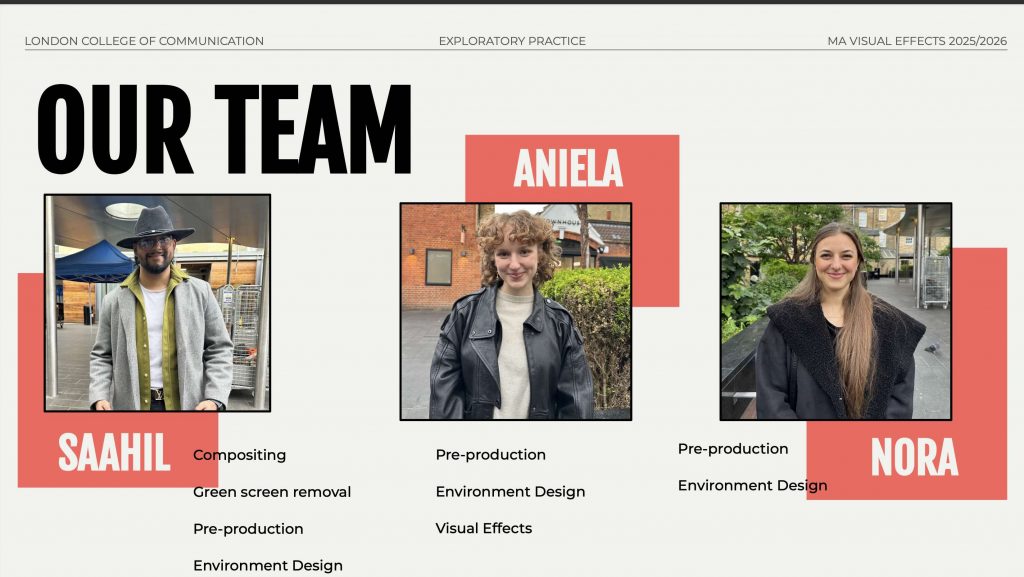
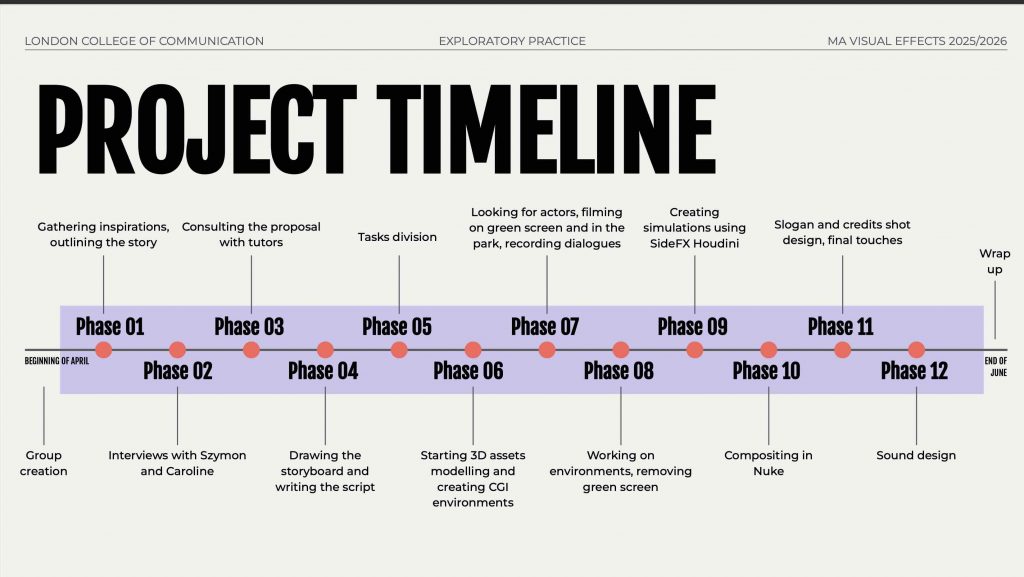
Our group consisted of three members: Aniela, Saahil and myself. While we worked together on the initial concept, research, pre-production and live-action filming, we divided the main VFX work between us so that each person was responsible for different environments and stages of the production.
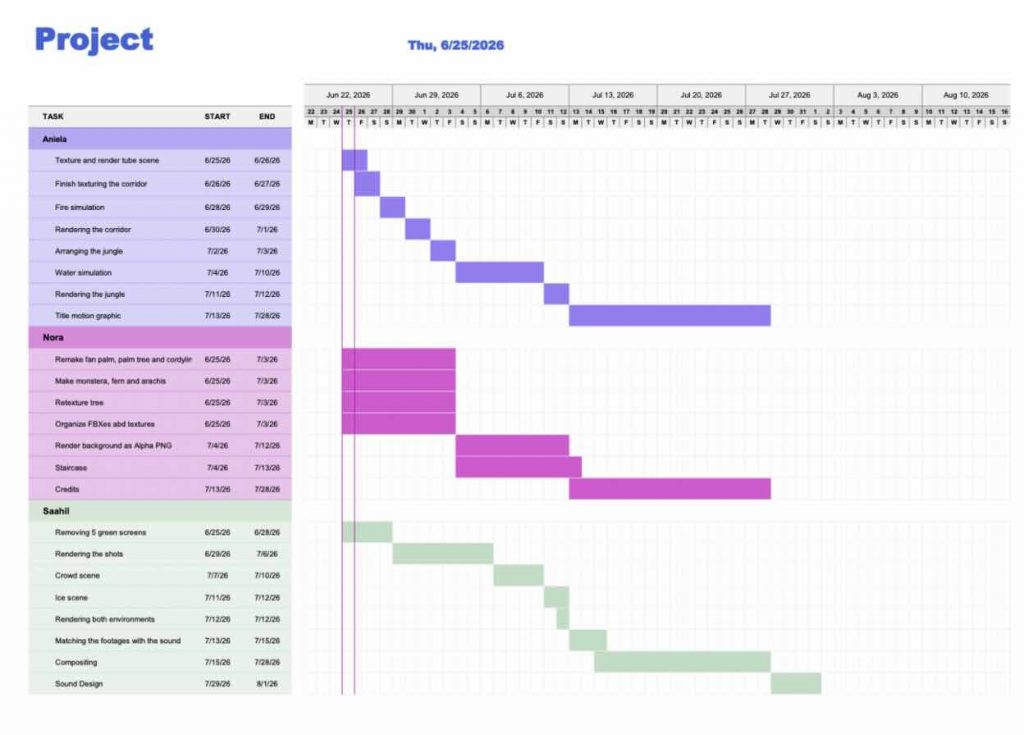
The tasks were divided based on our individual interests and the areas we wanted to develop further. Each of us took responsibility for specific CGI environments, while other tasks such as compositing, effects and sound were also distributed across the team. Since my main interest is environment art, I took responsibility for the Jungle and Staircase environments.
To keep the production organised, we created a shared project timeline outlining the main tasks, responsibilities and deadlines for each team member. This helped us keep track of the different parts of the project and coordinate our work towards the final film.
Concept and Look Development
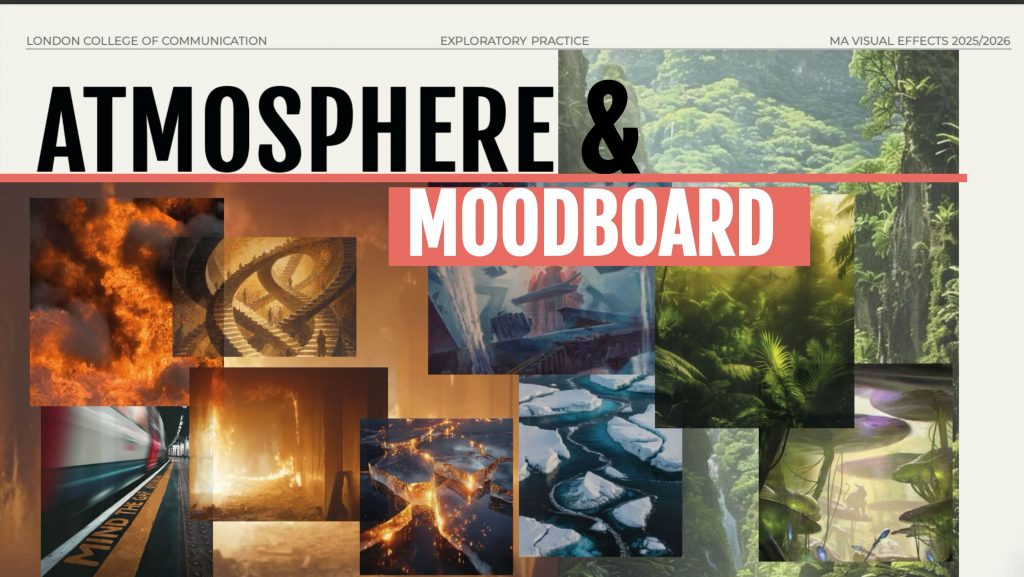
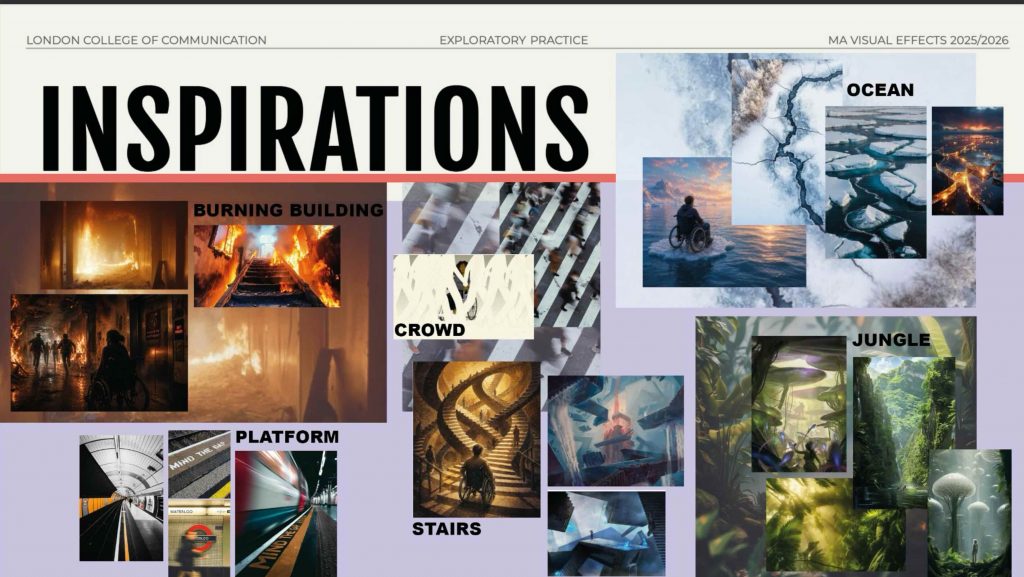
Before beginning production, we created moodboards and reference boards to establish the visual direction of the film. Because the story moves through several very different CGI environments, we wanted each scene to have its own recognisable atmosphere while still feeling like part of the same project.
We collected references for each environment, focusing on elements such as scale, lighting, colour, composition and overall mood. The environments were intentionally more dramatic and exaggerated than the real-world scenes, as they represent the protagonist’s thoughts and perception of the situations rather than completely realistic locations.
These references also gave us an initial visual target for the individual environments before we began developing them in 3D.
The Final Outcome – Project “Unseen”
Creating the Jungle
The focus of this project was to create a complete jungle environment from scratch. As I want to pursue a career as an Environment Artist for video games, I wanted to challenge myself to build an environment without using any pre-made assets. Having never created foliage or a full natural environment before, this was a completely new process for me.
Every plant, leaf and environmental element was created by me, allowing me to develop my skills in foliage creation, organic modelling, texturing and environment building.
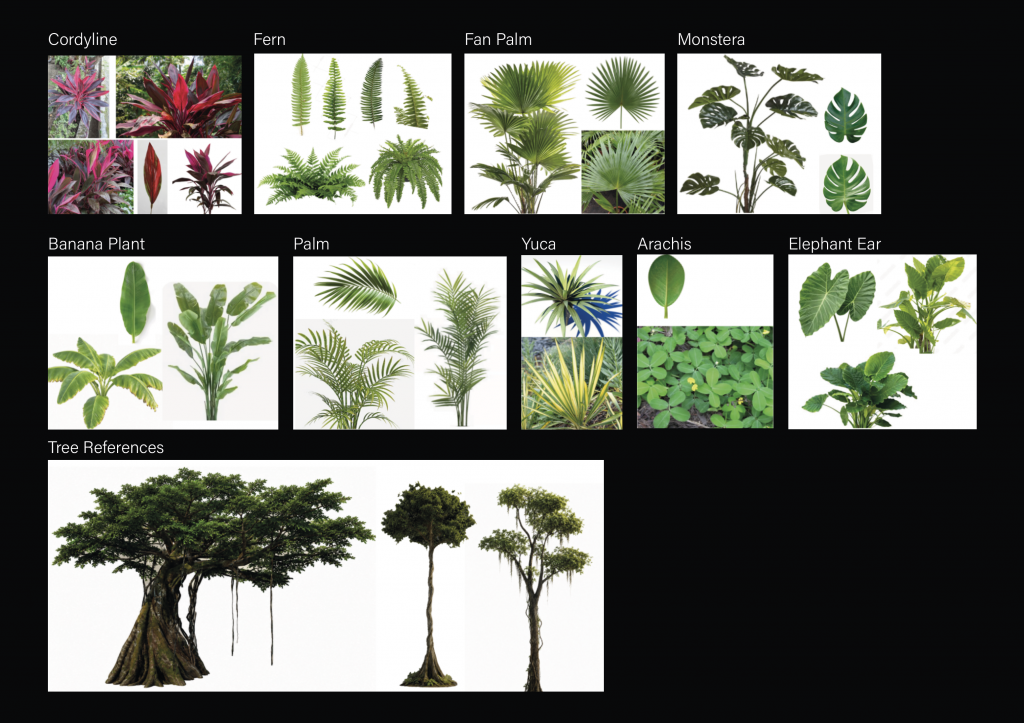
Reference Sheet
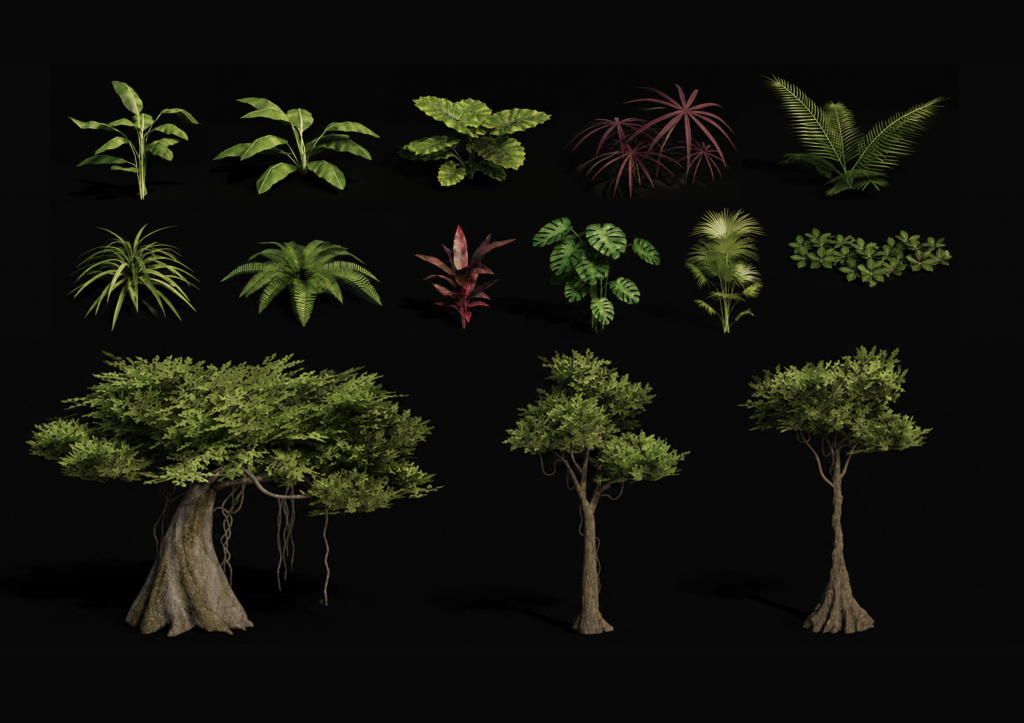
Before beginning the modelling process, I created a reference sheet for the vegetation I wanted to build. I selected plants with different shapes, sizes and leaf structures to create enough variation for a dense and believable jungle.
These references became a visual guide for modelling each plant individually and helped me understand how different types of vegetation could later be layered together within the environment.
Elephant Ear
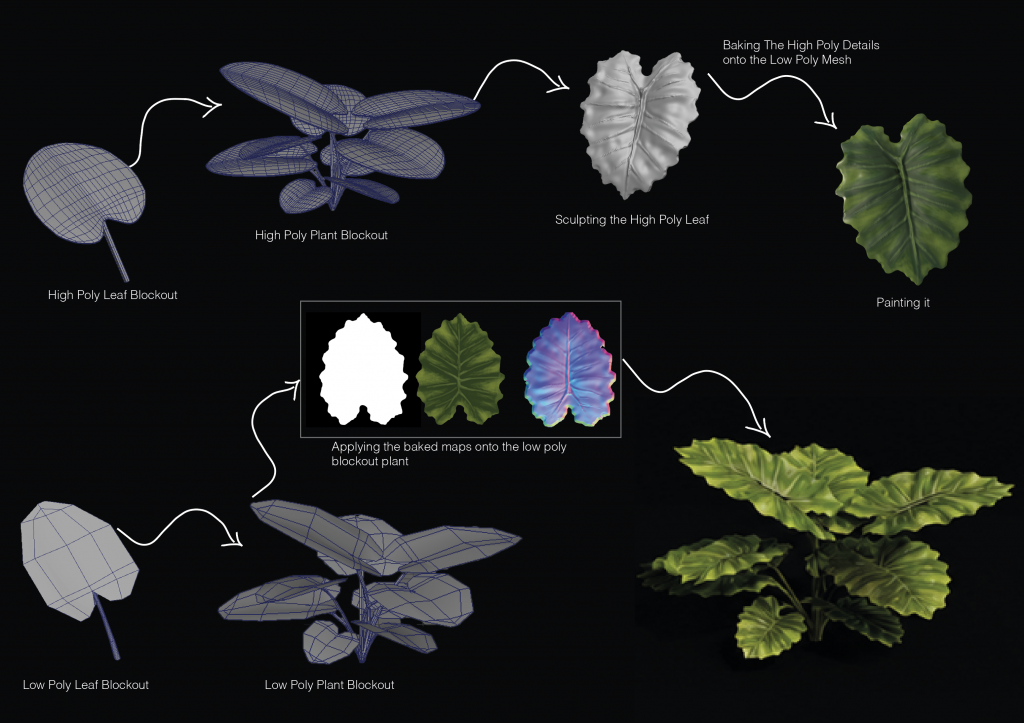
I began the Elephant Ear plant by creating a high-poly leaf blockout in Maya, followed by the full plant structure. I then brought the leaf model into ZBrush, where I significantly developed the shape and sculpted the high-poly details of the leaves.
The details were baked onto a flat low-poly plane in Substance Painter, where I also hand-painted and textured the leaf. I then built the final low-poly plant in Maya, imported it into Unreal Engine, and connected and applied the texture maps.
Cordyline
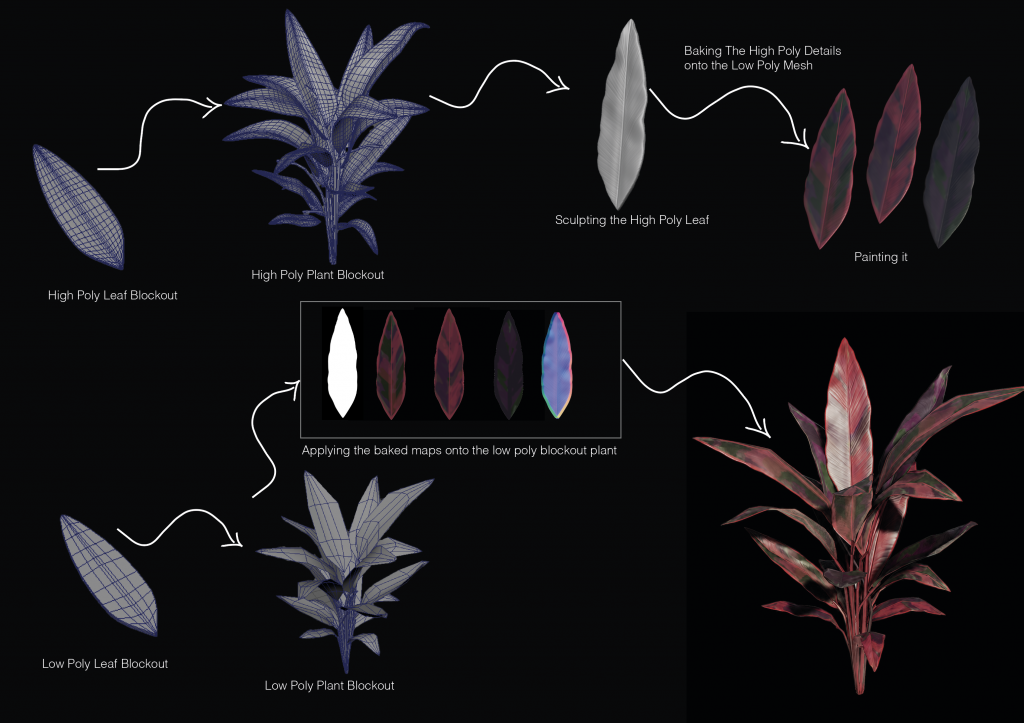
I followed a similar process for the Cordyline plant, beginning with a high-poly leaf blockout in Maya before developing the shape and sculpting the details in ZBrush.
The high-poly details were baked onto a low-poly plane in Substance Painter, where I hand-painted and textured the leaves. I created three different colour variations to introduce natural variation and avoid the plant looking repetitive or unrealistic. I then built the low-poly plant in Maya, imported it into Unreal Engine, and connected and applied the texture maps.
Banana Plant
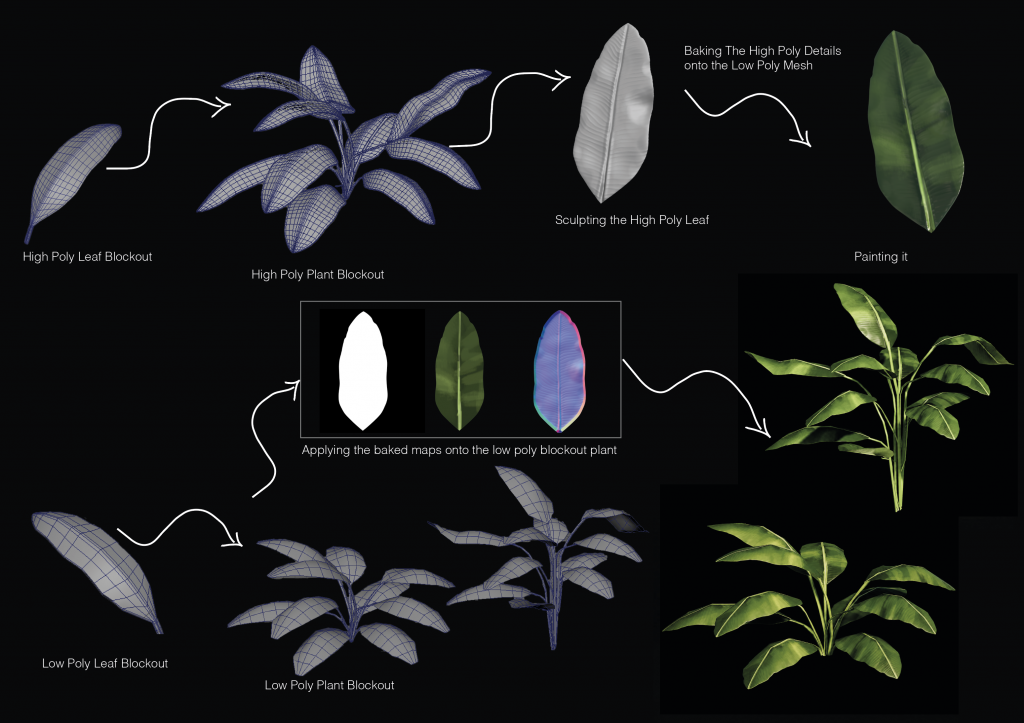
For the Banana plant, I followed the same high-poly to low-poly workflow established with the previous foliage. In ZBrush, I focused on sculpting the characteristic line details of the banana leaf before baking and hand-painting it in Substance Painter.
Using the finished leaf, I created two different plant variations with different structures and leaf arrangements to provide more variety when using the assets in Unreal Engine.
Yuca Plant
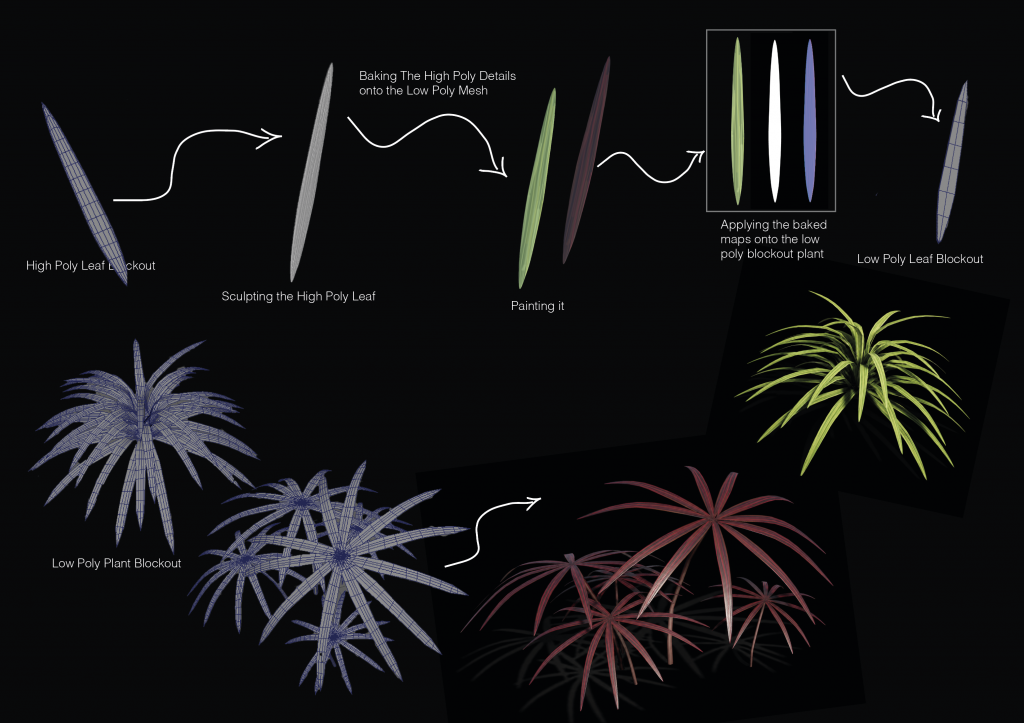
For the Yucca plant, I followed the same high-poly to low-poly workflow, sculpting and hand-painting a single leaf before baking the details onto the low-poly version.
Using the same finished leaf, I created two different plant shapes by changing the overall structure and arrangement of the leaves. This allowed me to create more variety from a single foliage asset.
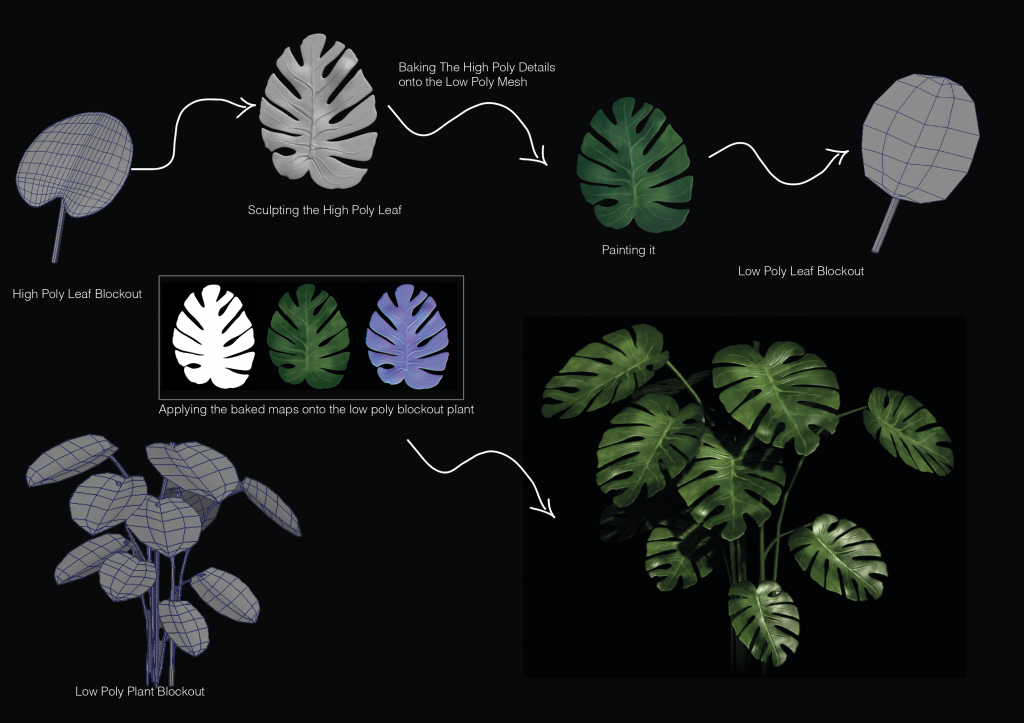
Monstera
The Monstera was more focused on capturing its distinctive leaf shape. I sculpted the characteristic splits and openings directly into the high-poly leaf in ZBrush, as these are the main features that make the plant immediately recognisable.
After creating the finished leaf, I used it to build the full plant, arranging the leaves at different heights and angles to recreate the natural structure of a Monstera.
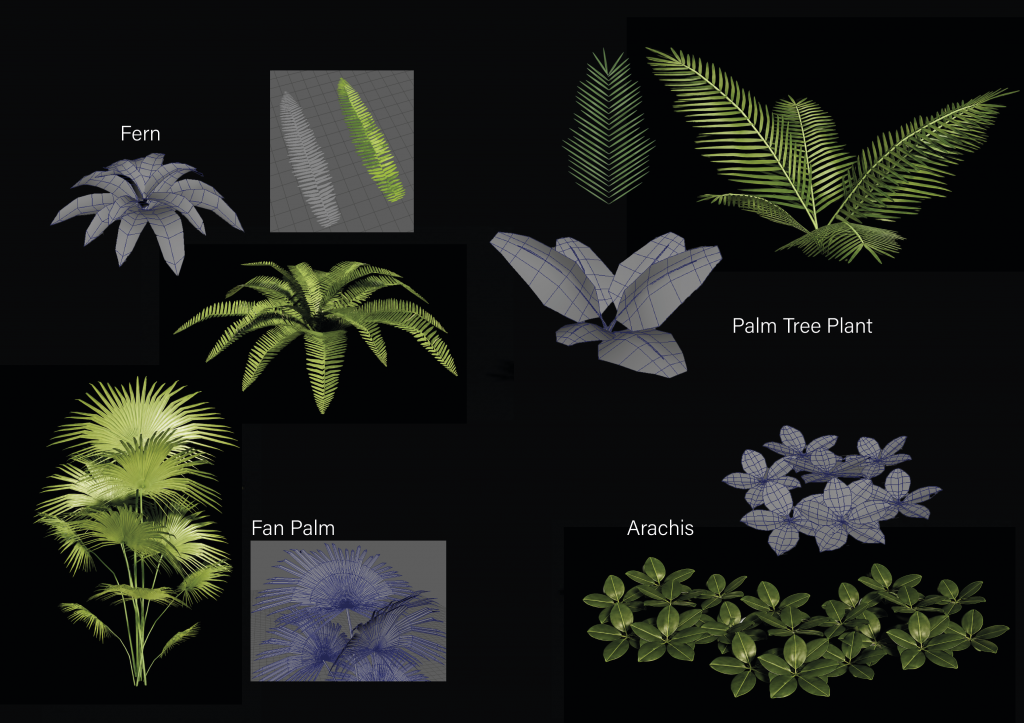
Fern, Palm Tree Plant, Fan Palm, Arachis
For the smaller foliage, I experimented with different ways of creating more complex leaf structures efficiently. For the Fern and Palm plants, I created individual leaf sections and arranged them to form the larger fronds before building the full plants.
The Fan Palm required a different structure, with the individual leaves arranged into the distinctive fan shape. For the Arachis, I created a small cluster of rounded leaves and repeated it in different positions to produce a dense ground-cover plant. These smaller assets were particularly useful for adding variation and density to the jungle vegetation.
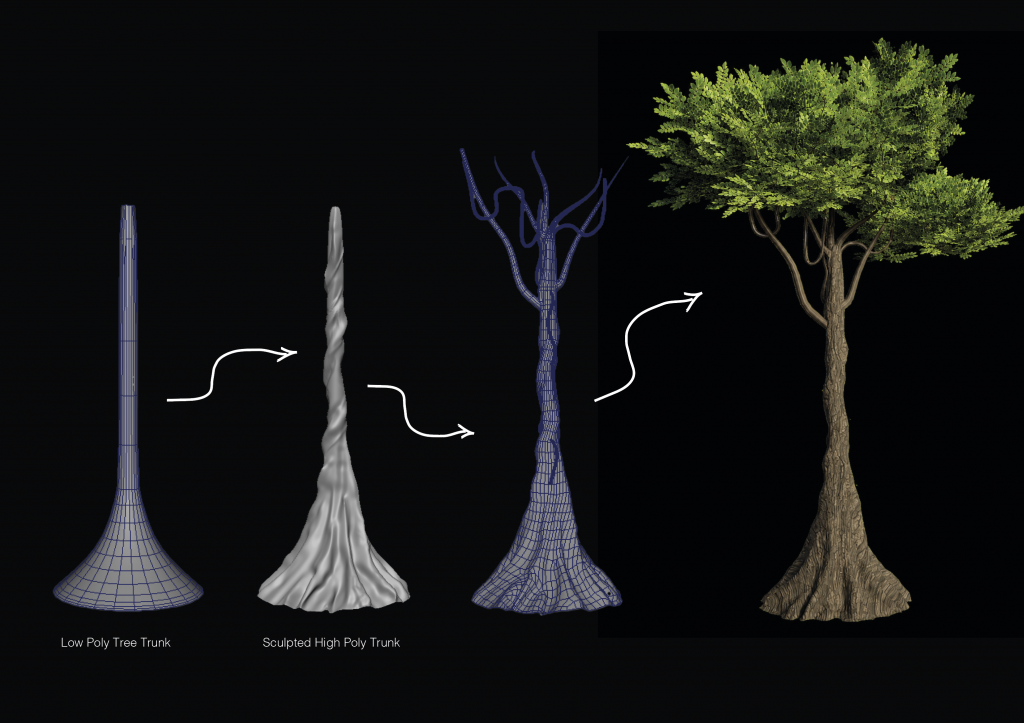
Rainforest Trees
For the tree, I first created the basic trunk shape in Maya and then sculpted the high-poly trunk in ZBrush, focusing on the irregular forms and surface texture of the bark. I then used ZRemesher in ZBrush to retopologise the sculpt and create the low-poly version.
For the leaves, I used a reference image found online and created an alpha from it in Photoshop. I then used this to build clusters of foliage, which were arranged across the branches to create the tree canopy.
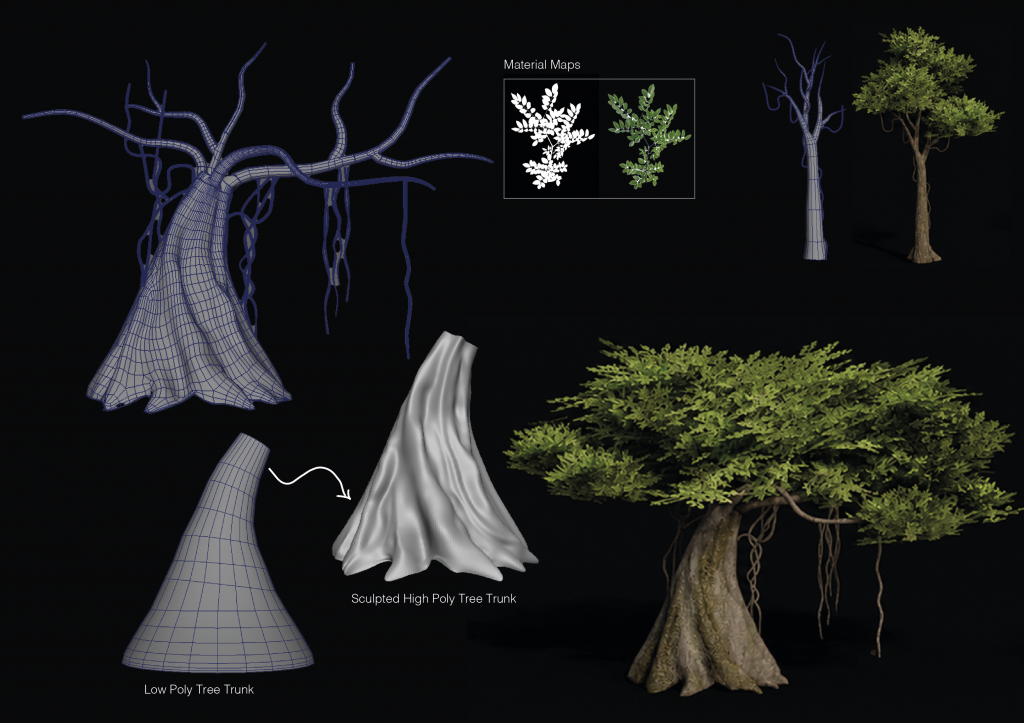
For the second tree, I wanted to create a larger and more organic silhouette. I developed a wider trunk with extended branches and hanging roots, sculpting the trunk in ZBrush before creating the low-poly version.
I used the same leaf alpha created in Photoshop for the foliage, but arranged the leaf clusters differently to create a wider, denser canopy and a distinct tree variation.
The final result
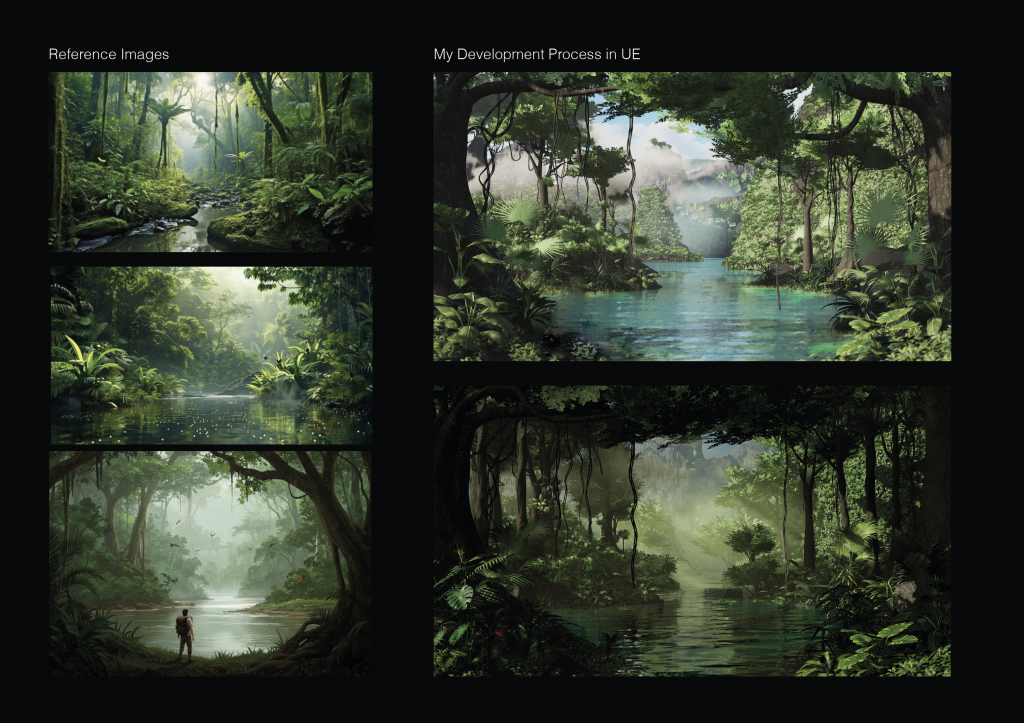
Environment Assembly & Development
Using the reference images on the left, I began assembling the jungle environment with the foliage and trees I had created. My first version helped establish the overall composition, but the water colour and lighting did not match the atmosphere I wanted, and the lack of fog made the environment feel flat and reduced the sense of depth.
I continued developing the scene by adjusting the lighting and water colour and introducing atmospheric fog. These changes created stronger depth between the foreground and background and brought the final environment much closer to the mood of my original references.
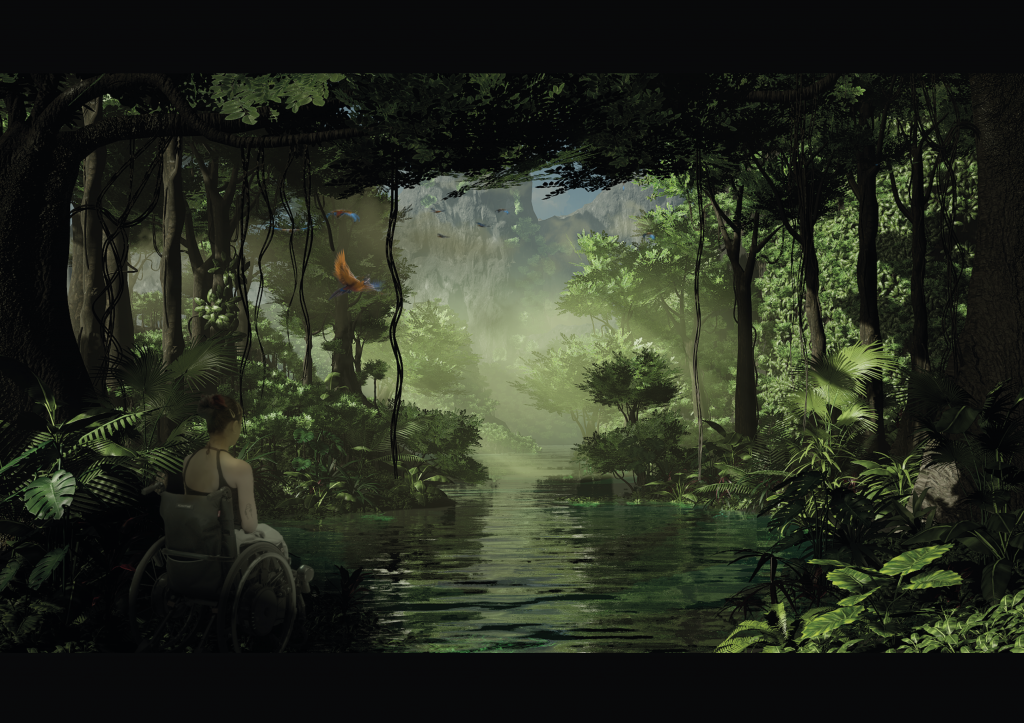
Final Jungle – Live-Action Compositing
For the final shot, I composited the live-action footage into the completed jungle environment and adjusted the colour grading to better match the lighting of the scene. I also added birds to bring subtle movement and life into the environment.
Breakdown Video – Making of the Jungle
Creating the Staircase Environment
For the Staircase environment, I created the entire structure in Cinema 4D before importing it into Unreal Engine, where I developed the lighting and rendered the final shots. The concept was based around an overwhelming and impossible architectural space, using repeated staircases to exaggerate the difficulty of navigating an environment that has not been designed with accessibility in mind.
I explored two different iterations of the environment. The first used circular and curved forms, while the second used rectangular forms and straight staircases. I decided to continue with the second iteration as its simpler geometry created a more abstract and surreal environment, which worked better with the visual direction of the project.
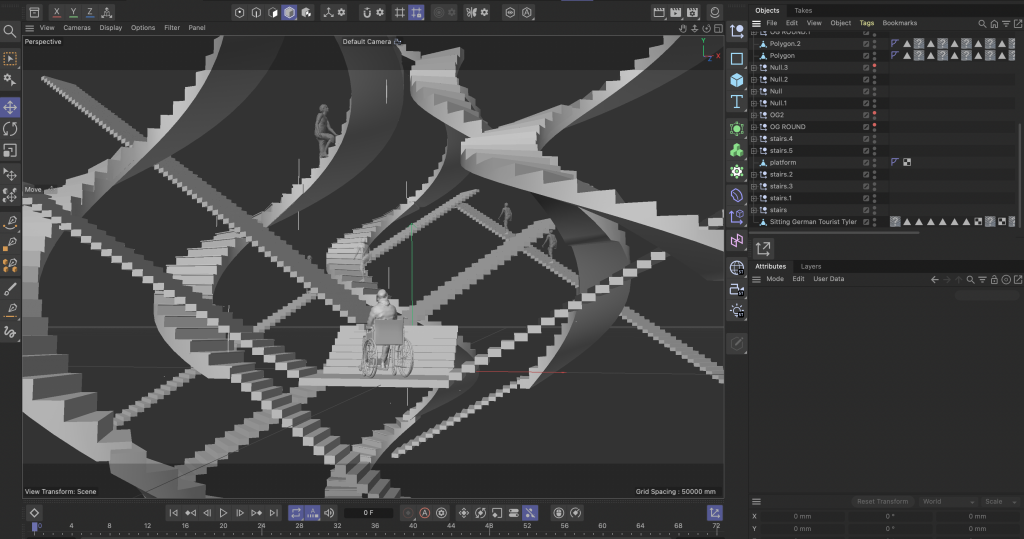
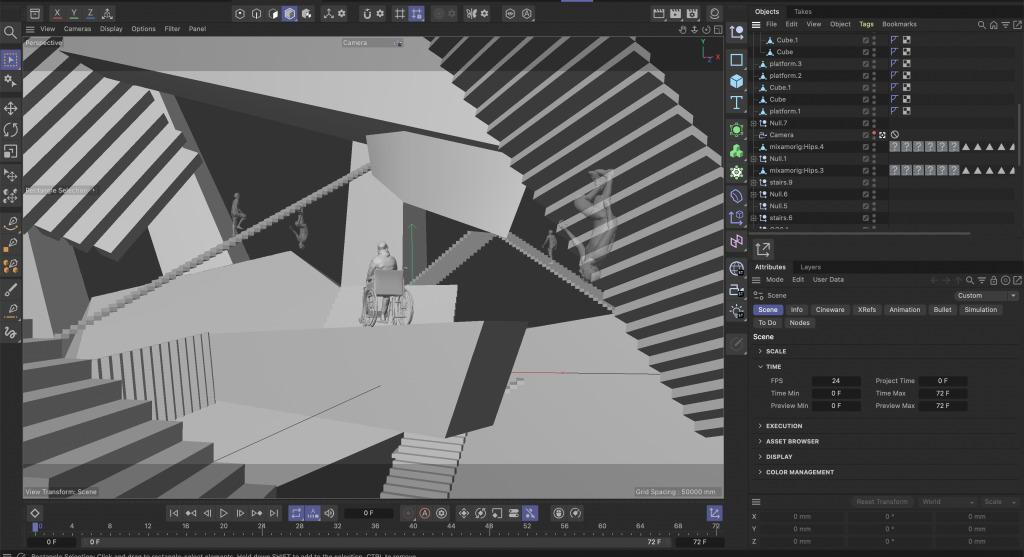
Breakdown Video – Making of the Staircase Environment
Live Action Shooting
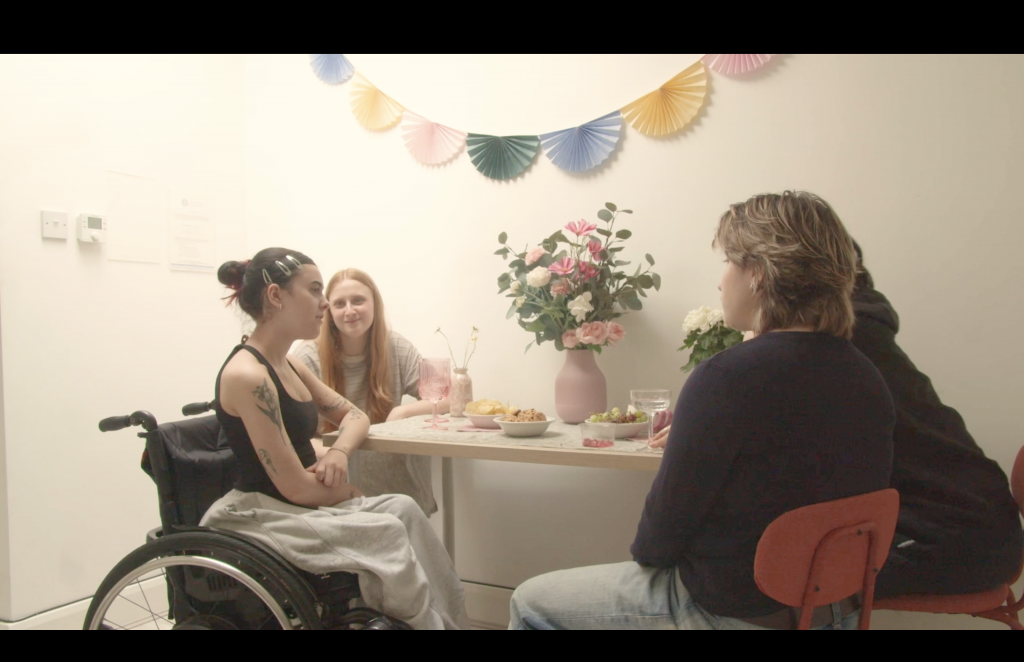
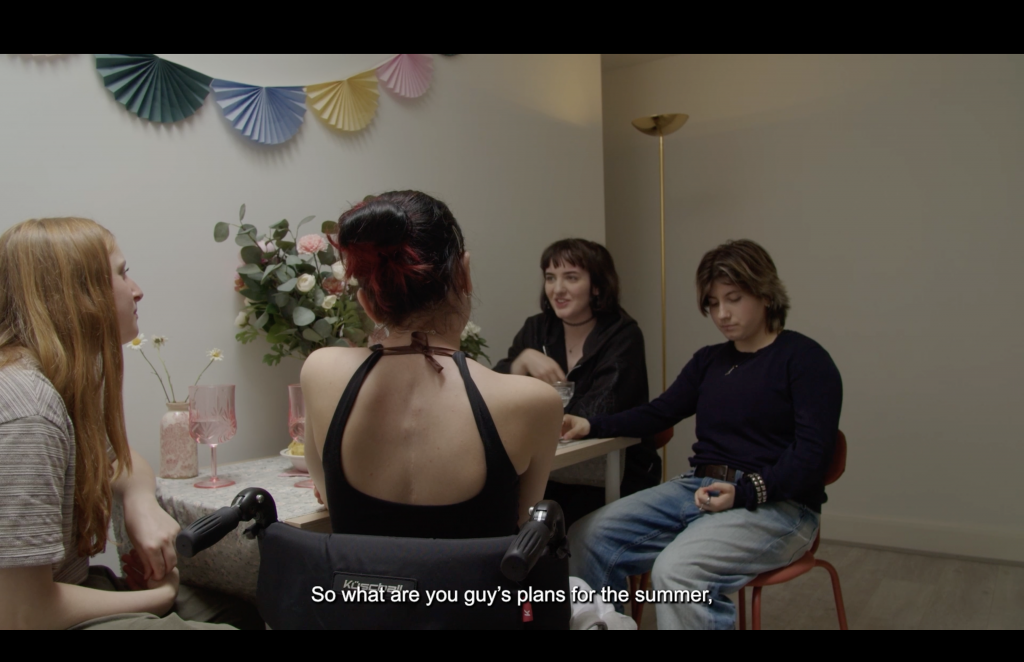
The live-action sequence was filmed collaboratively by all three of us: Aniela Chomaciuk, Saahil Sathe and myself, using my flat as the filming location. We found our cast through a Facebook group, and all of the performers were university acting students. Importantly, our lead actress is also a wheelchair user, which was particularly meaningful given the subject of the project and the experiences we wanted to represent.
We worked together on set to capture the conversation between the characters, which provides the foundation for the film before transitioning into the different VFX environments and visualising the accessibility challenges being discussed.
Green Screen Shooting
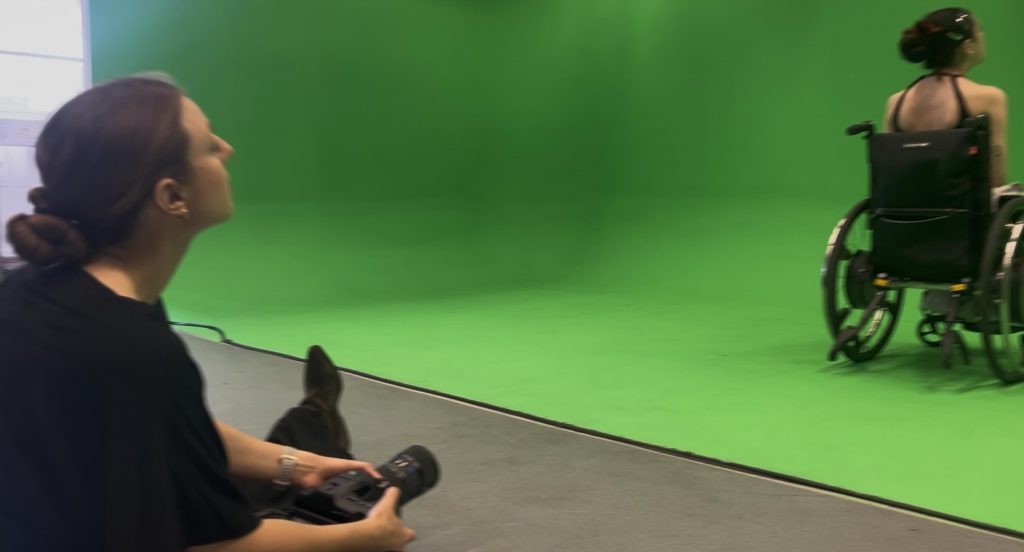
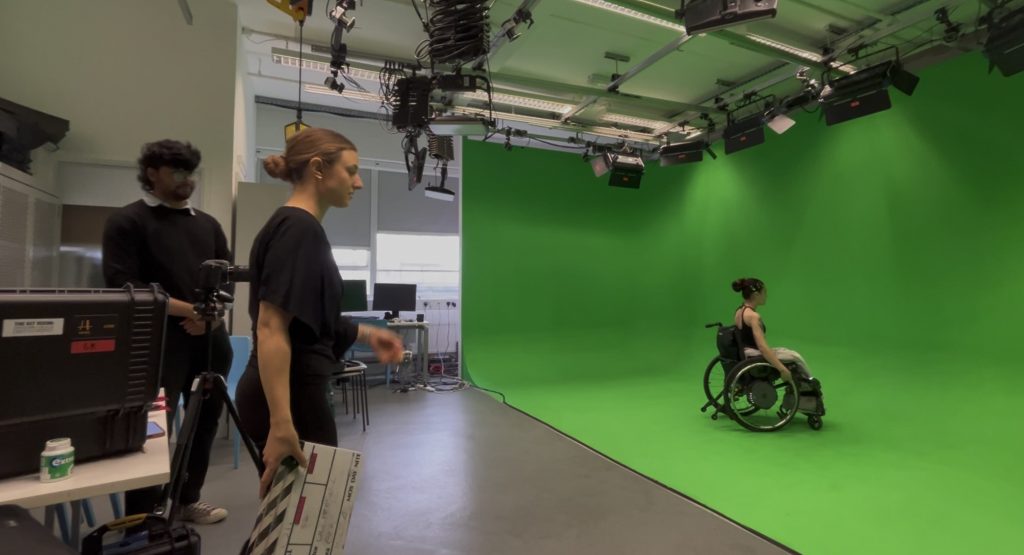
For the green screen shoot, we filmed the main character performing the movements needed for each of the different environments. We captured multiple takes and angles to make sure we had enough footage to work with during compositing. Filming in the green screen studio allowed us to later place her into each of our CG environments.
The rest of the Environments
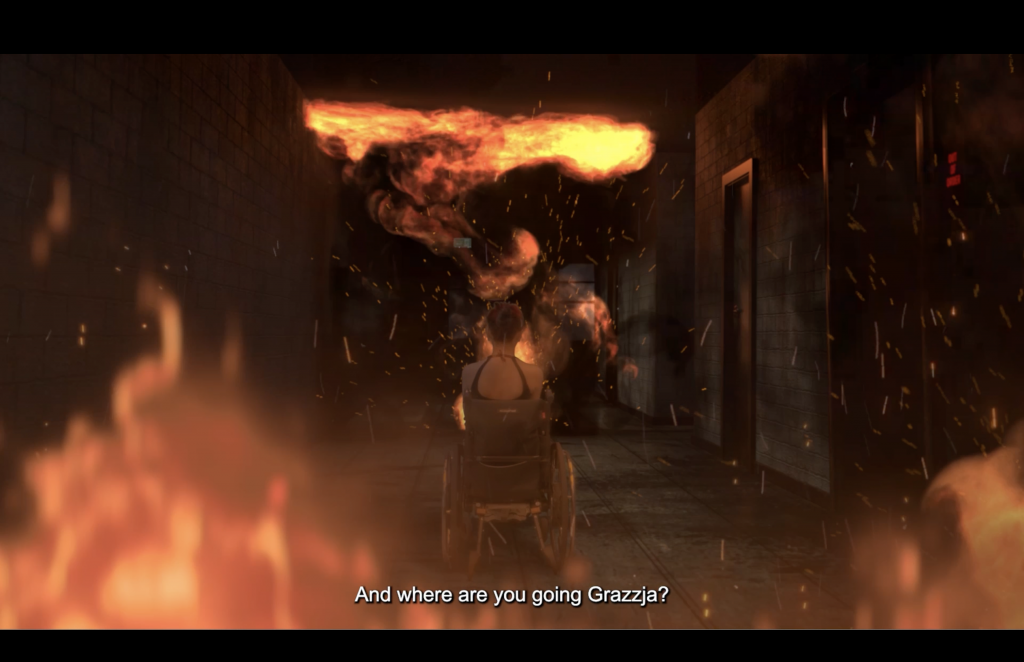
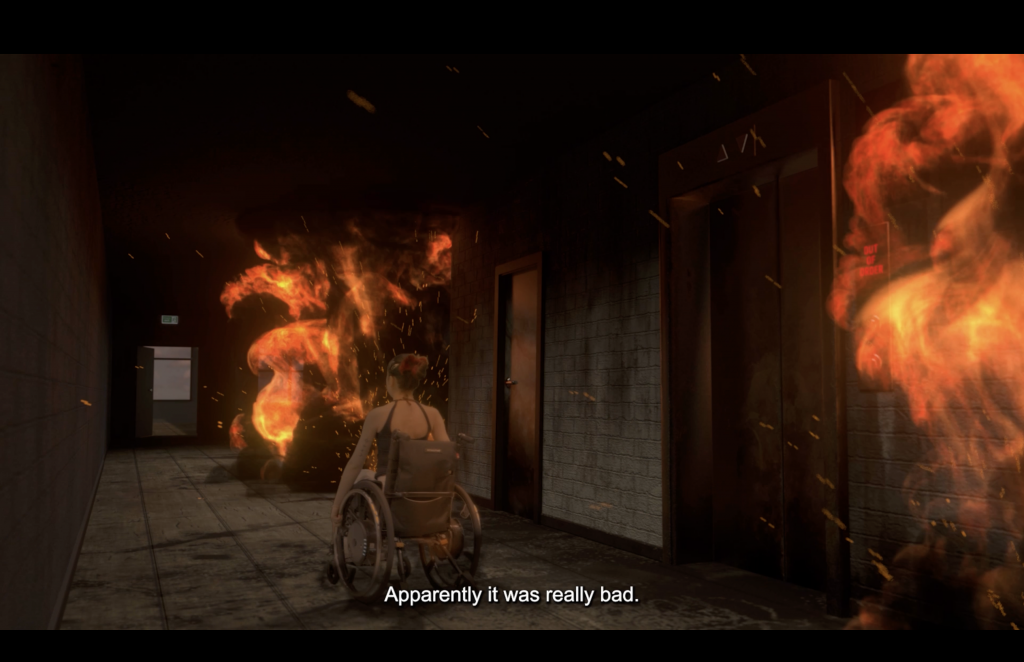
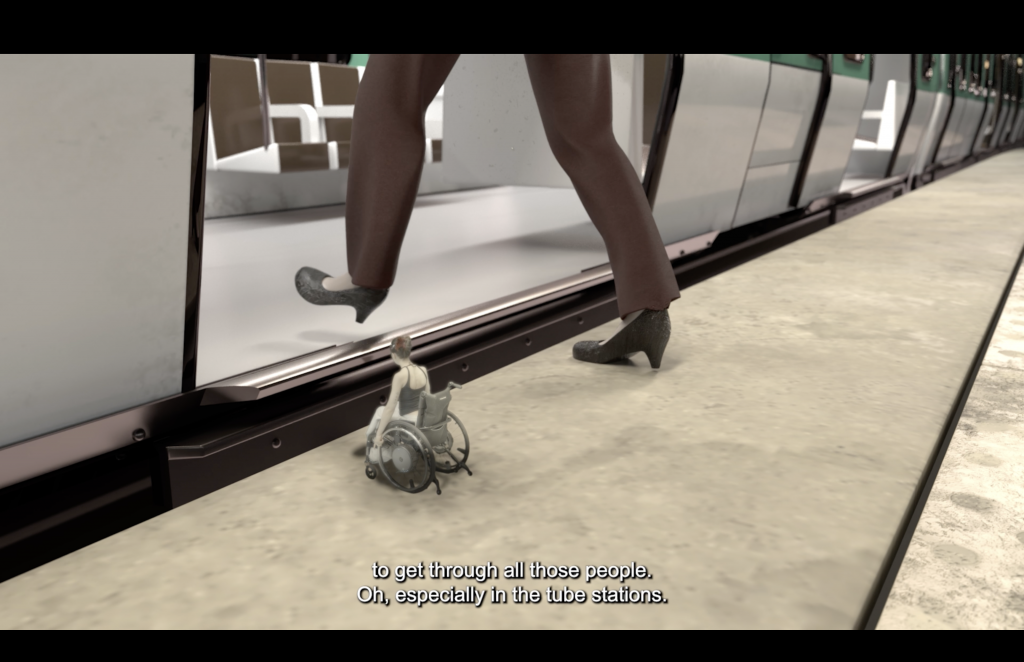
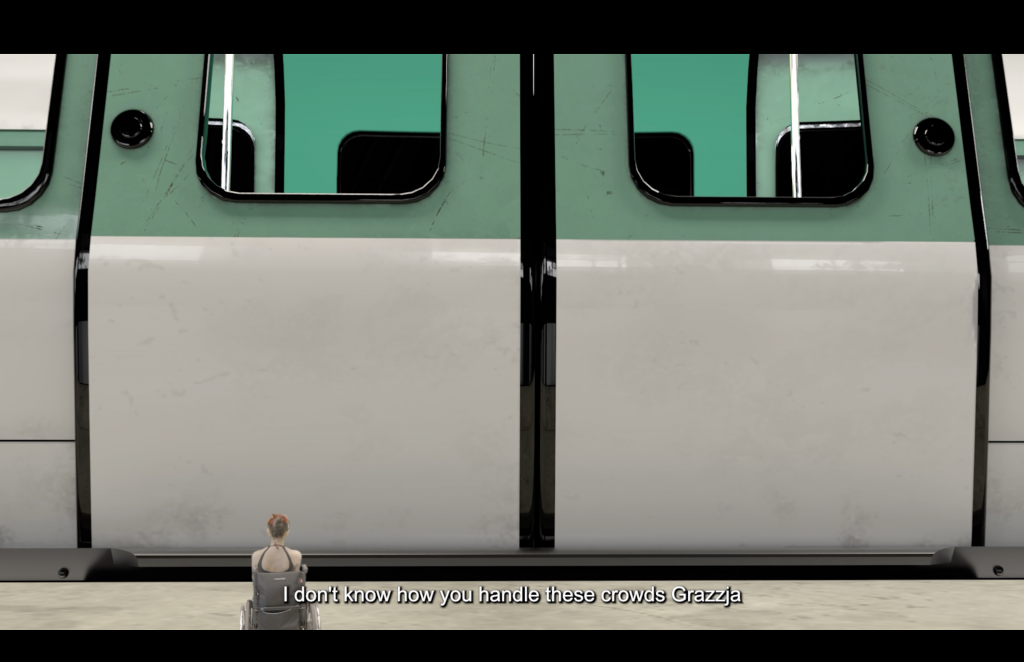
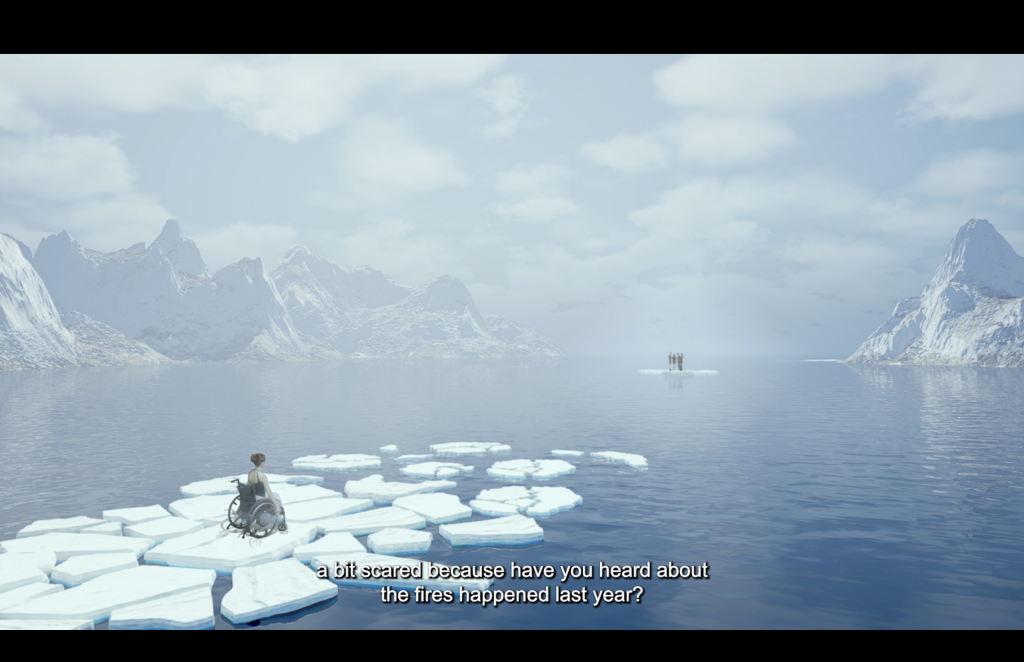
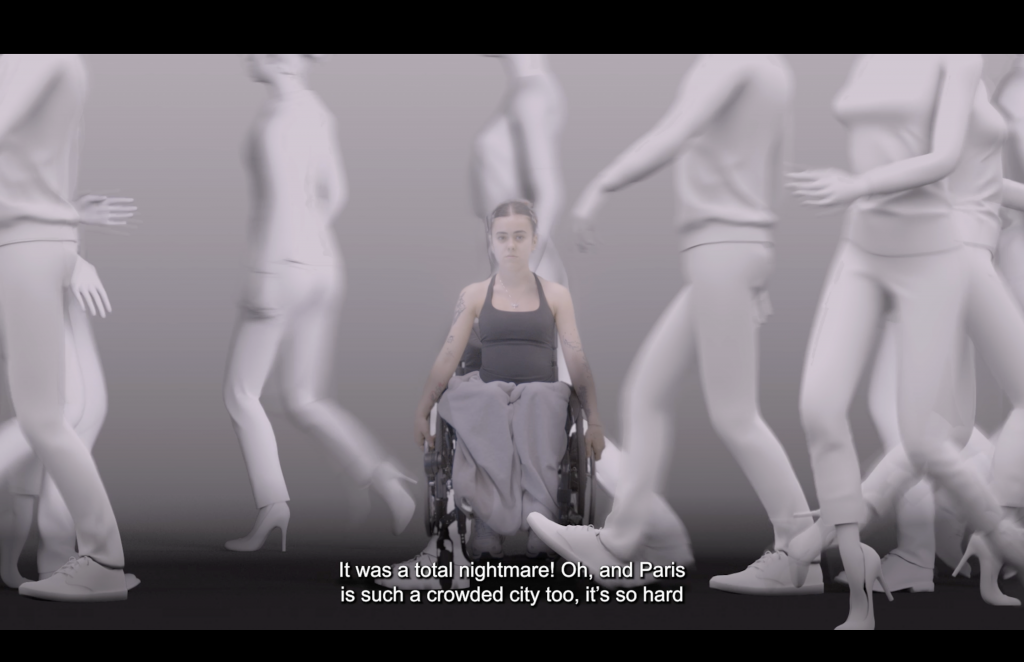
Alongside my Jungle and Staircase scenes, the remaining environments were divided between Aniela and Saahil. Aniela created the Fire Hallway and Tube Platform environments, including modelling, texturing, environment design and the procedural fire effects.
Saahil created the Ocean environment and assembled the Crowd scene, including the character animation integration. He was also responsible for the green-screen removal and compositing of the live-action footage with the CG environments.
Dividing the scenes between us allowed each person to take ownership of different parts of the project while maintaining the same overall concept and message.
The Entire Project Breakdown
Leave a Reply