The focus of this project was the creation of a stylised CGI environment that invites immersion and a sense of wonder. Coming from a background in interior design, I had never worked on exterior environments before starting the MA, and this project became my first experience of building an entire world from the outside in. I found this process deeply rewarding and genuinely enjoyable, particularly the freedom of shaping atmosphere through light, colour, and scale. Developing the environment confirmed my interest in world-building as a central part of my creative practice.
The fairy character was introduced as a subtle presence rather than a narrative lead. I had never modelled or rigged a character prior to this project, which made this stage challenging, but also an important learning experience. The story is intentionally not driven by action or character performance; instead, the fairy’s movement simply guides the viewer through the space, allowing the environment itself to remain the emotional core of the piece.
Creative Process:
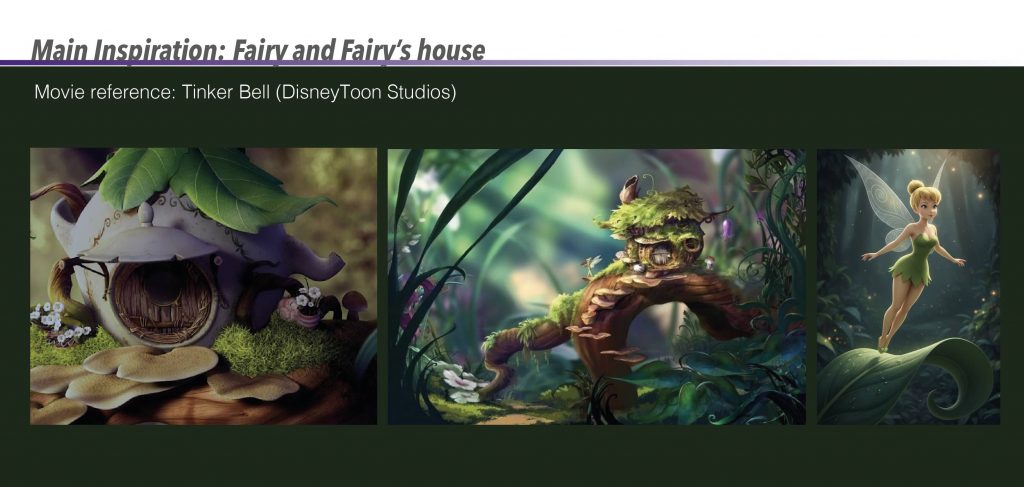
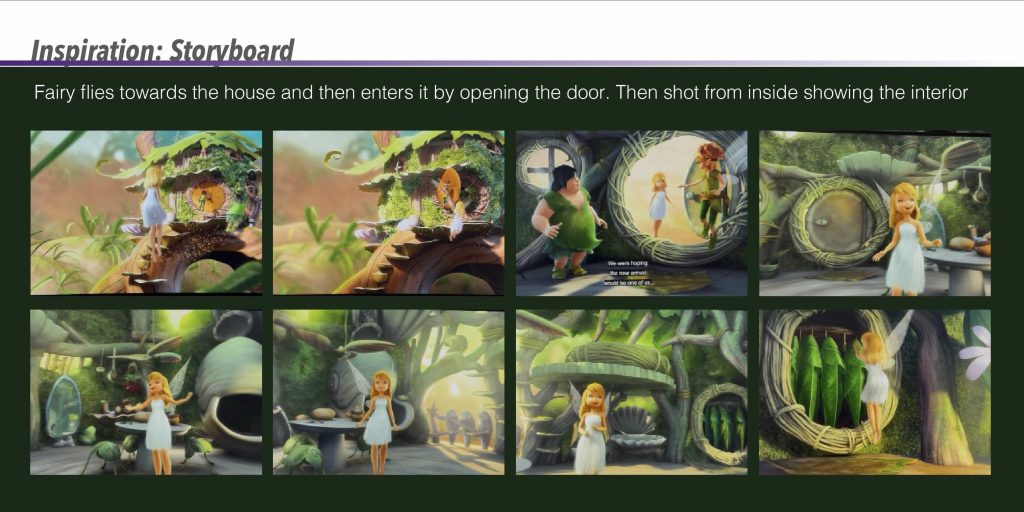
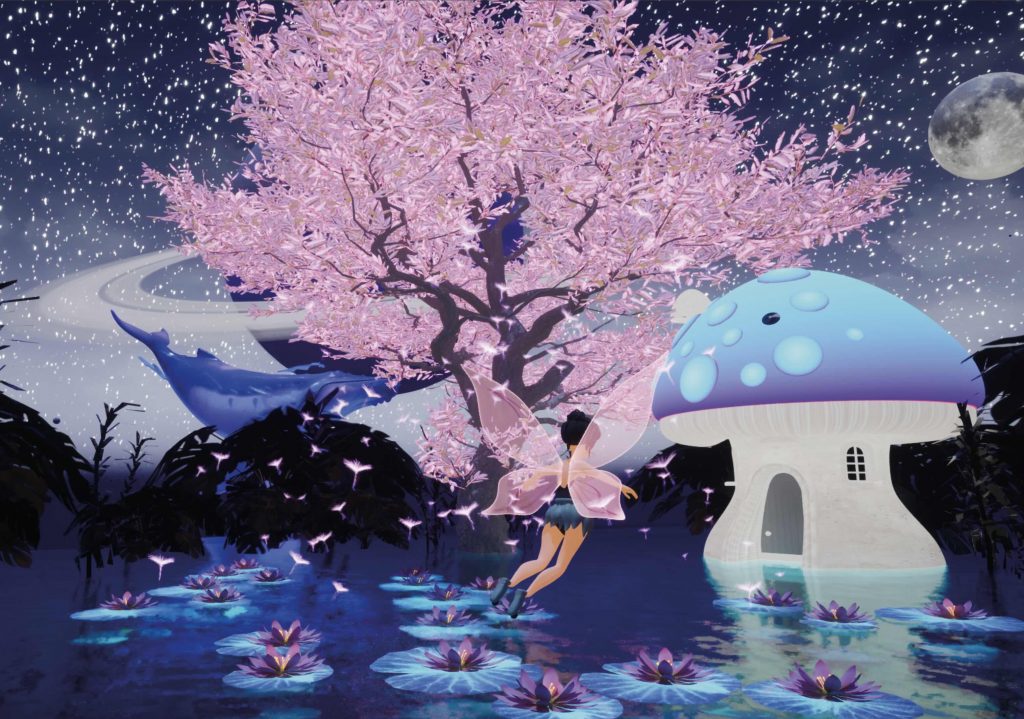
At the beginning of the project, my main source of inspiration came from Tinkerbell by DisneyToon Studios. I was particularly drawn to the whimsical representation of fairy worlds, the organic architecture, and the way small-scale environments are integrated into nature. Elements such as mushroom houses, curved forms, and soft, magical lighting helped shape my initial vision and establish a fairy-tale aesthetic for the project.Using scenes from Tinkerbell as reference, I explored how a simple narrative could be communicated through movement and environment. The storyboard focuses on the fairy flying towards her house, opening the door, and entering the space. These references helped me understand how camera angles, pacing, and spatial transitions could guide the viewer through a short animated sequence.
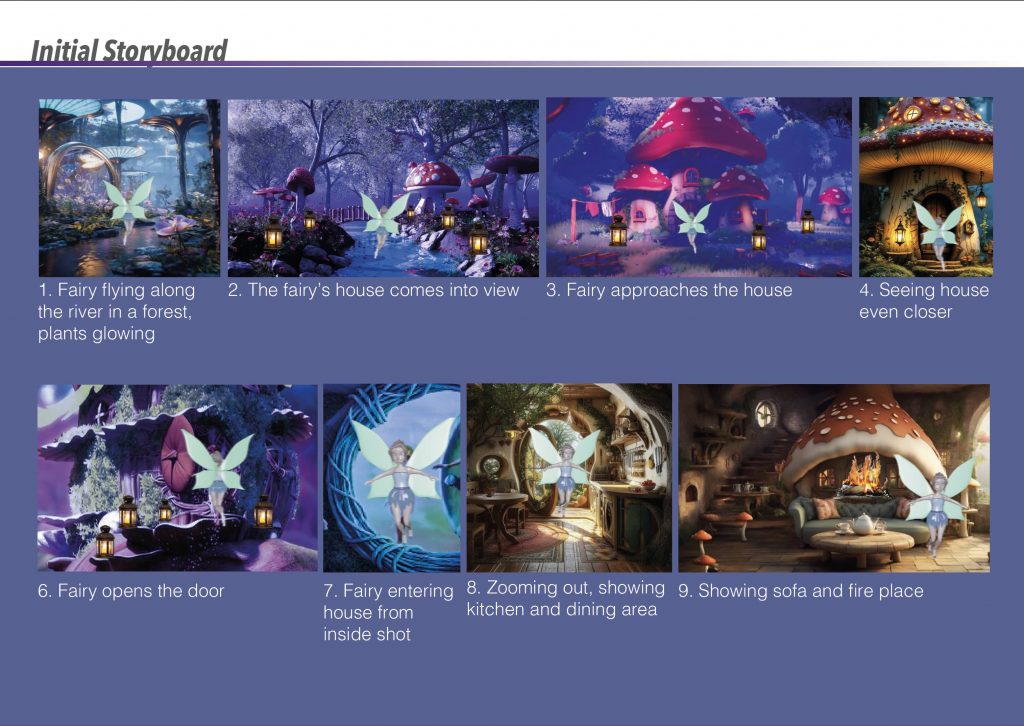
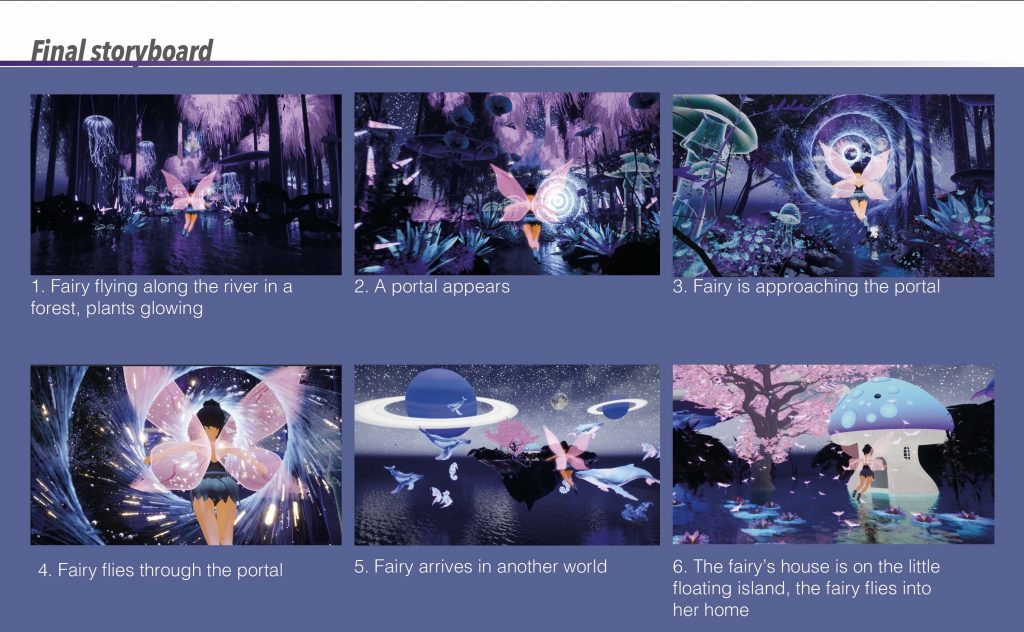
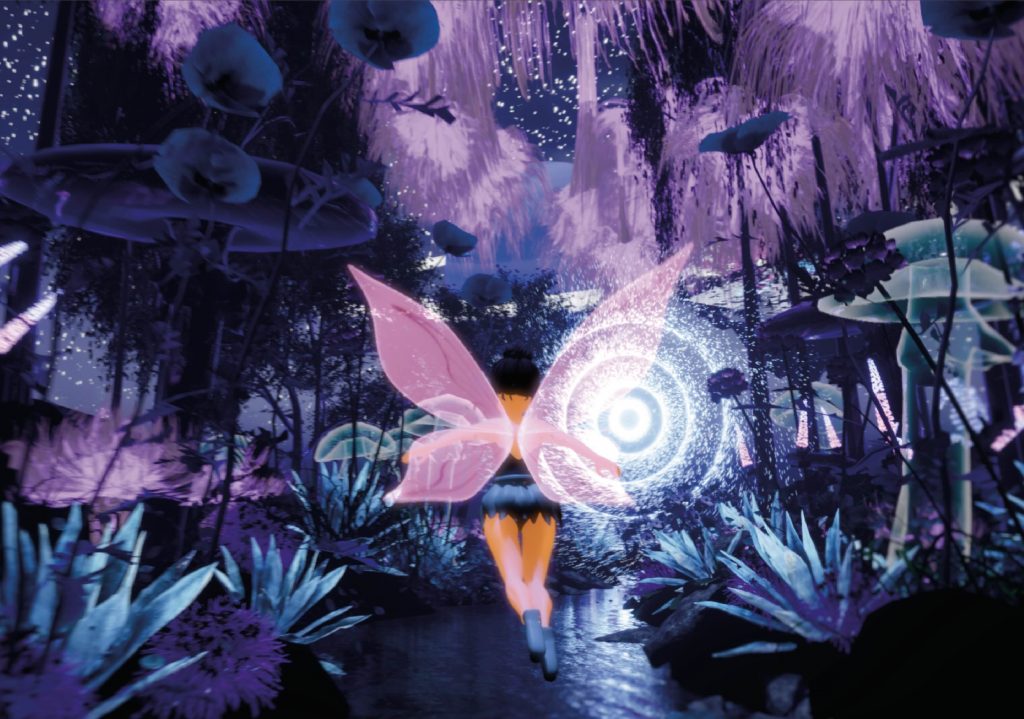
Based on this inspiration, I created my own initial storyboard to visualise how the environment and character would interact. The sequence begins with the fairy flying along a river within a forest, surrounded by glowing plants, before gradually revealing the mushroom house. The storyboard originally included interior shots of the house; however, it mainly served as a planning tool for composition, atmosphere, and the overall flow of the scene.
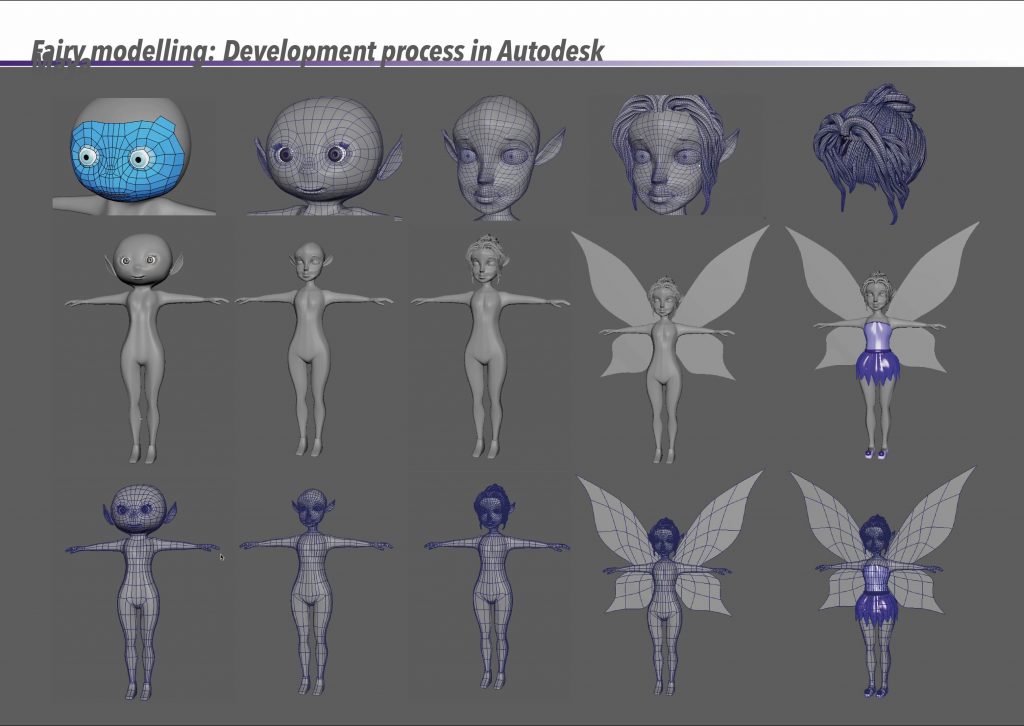
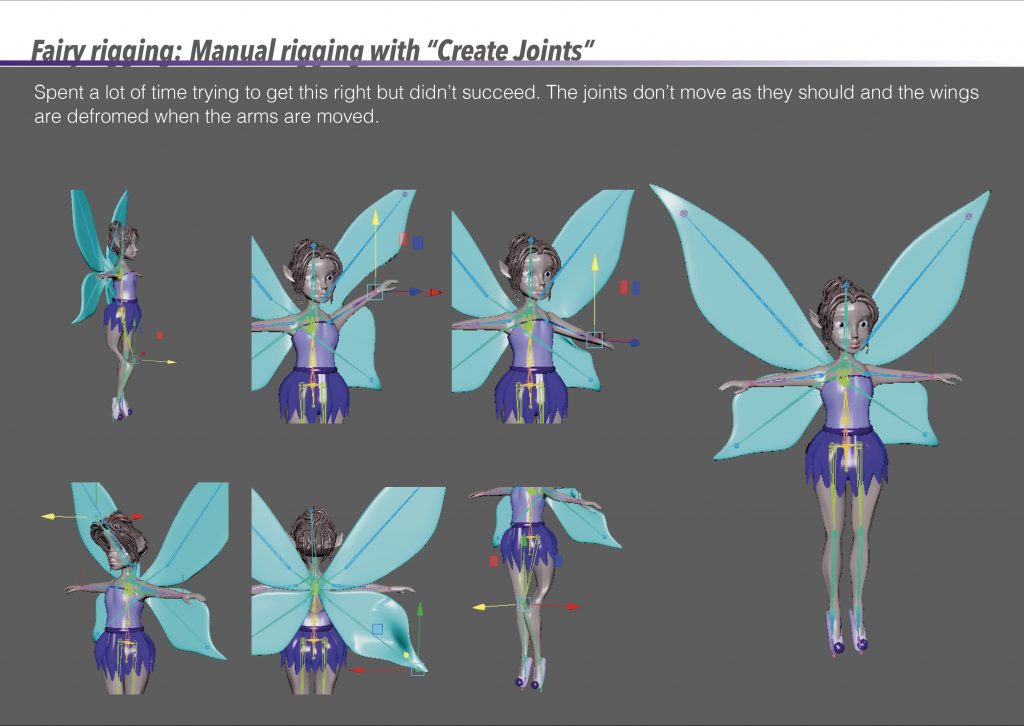
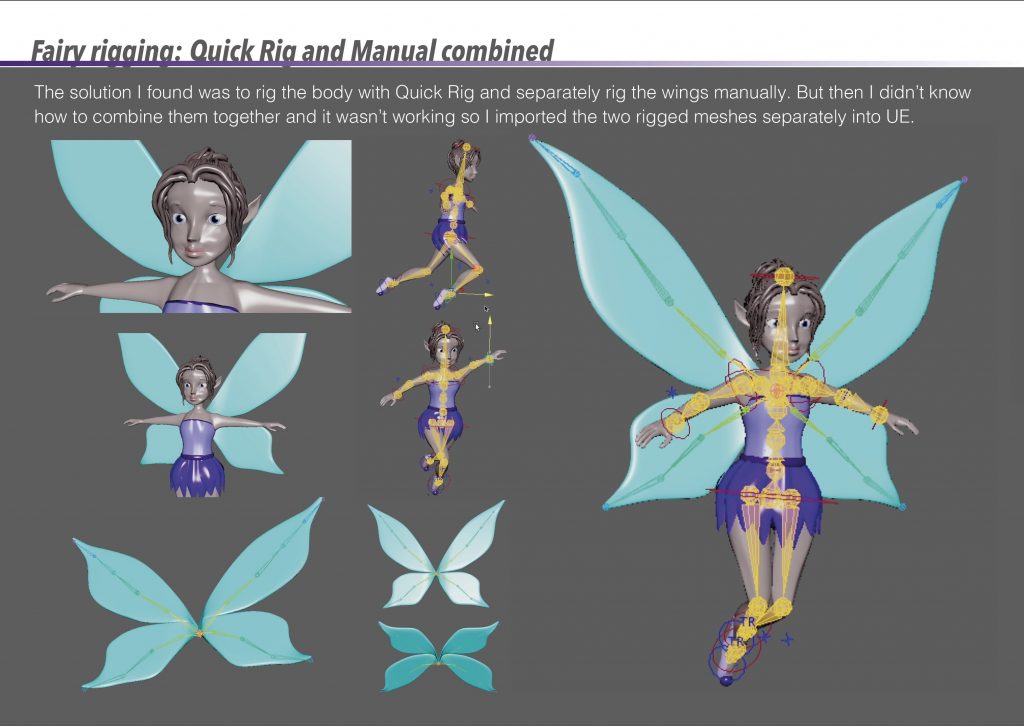
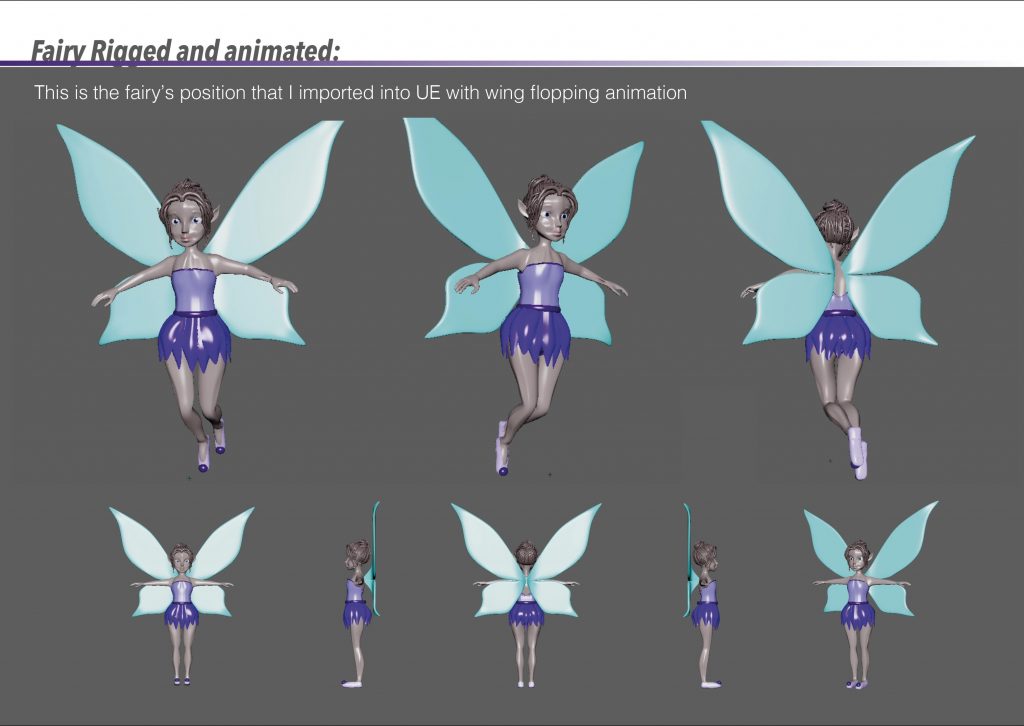
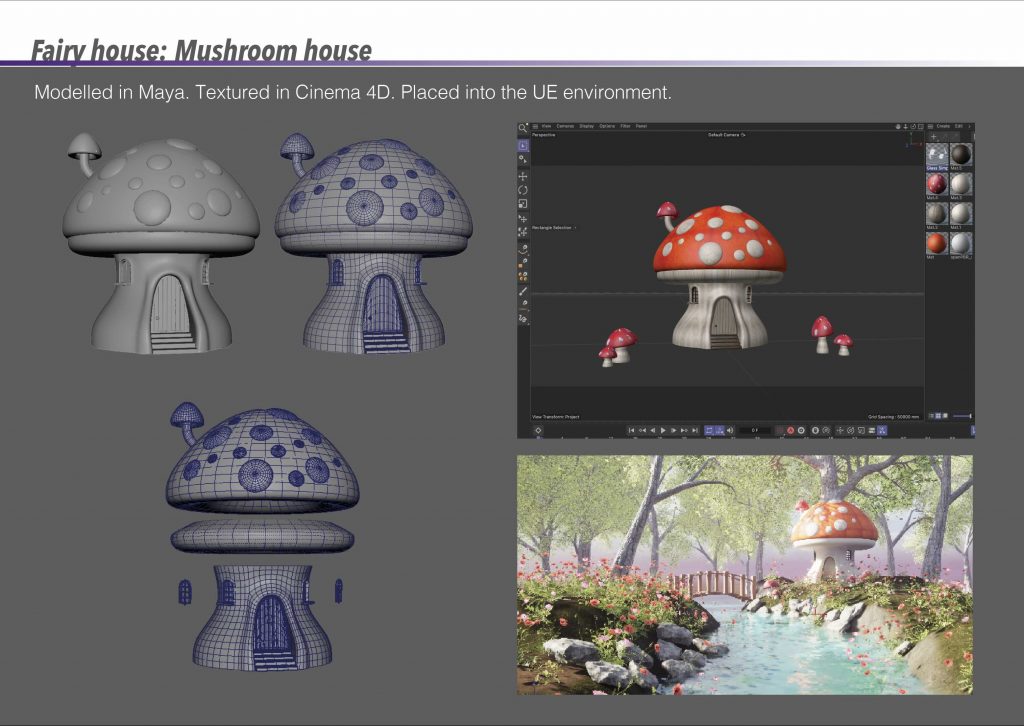
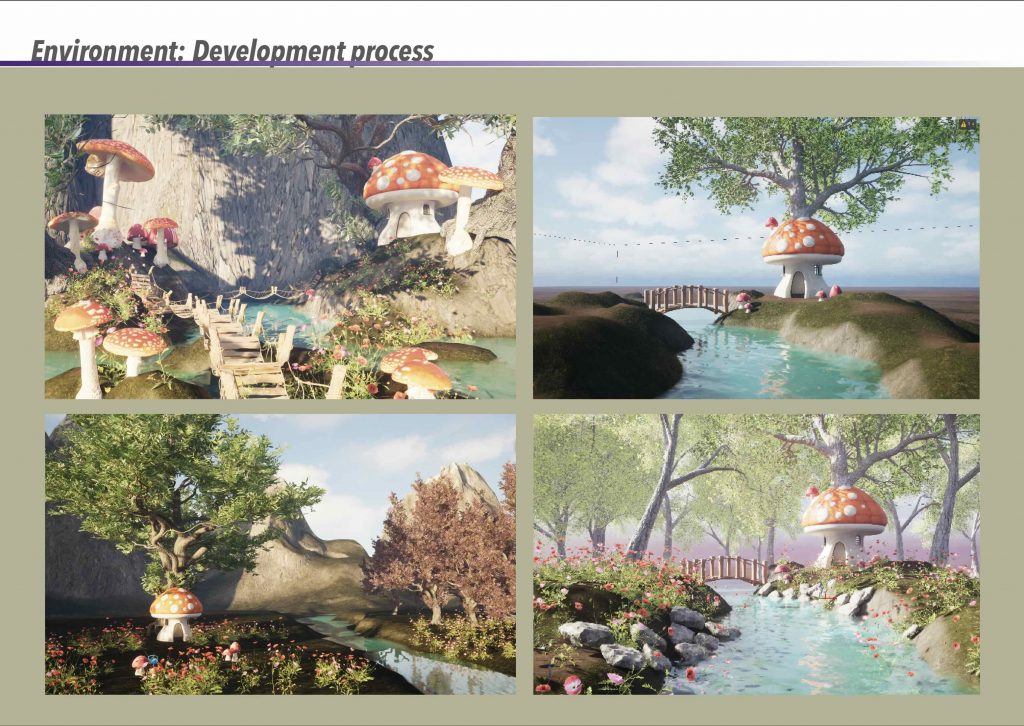
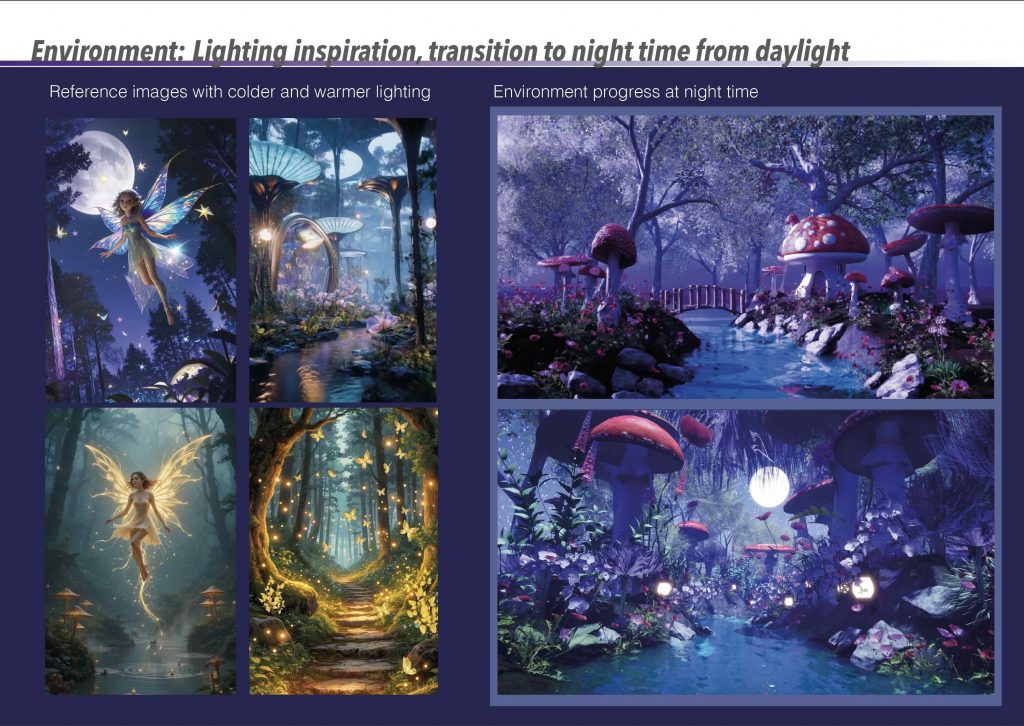
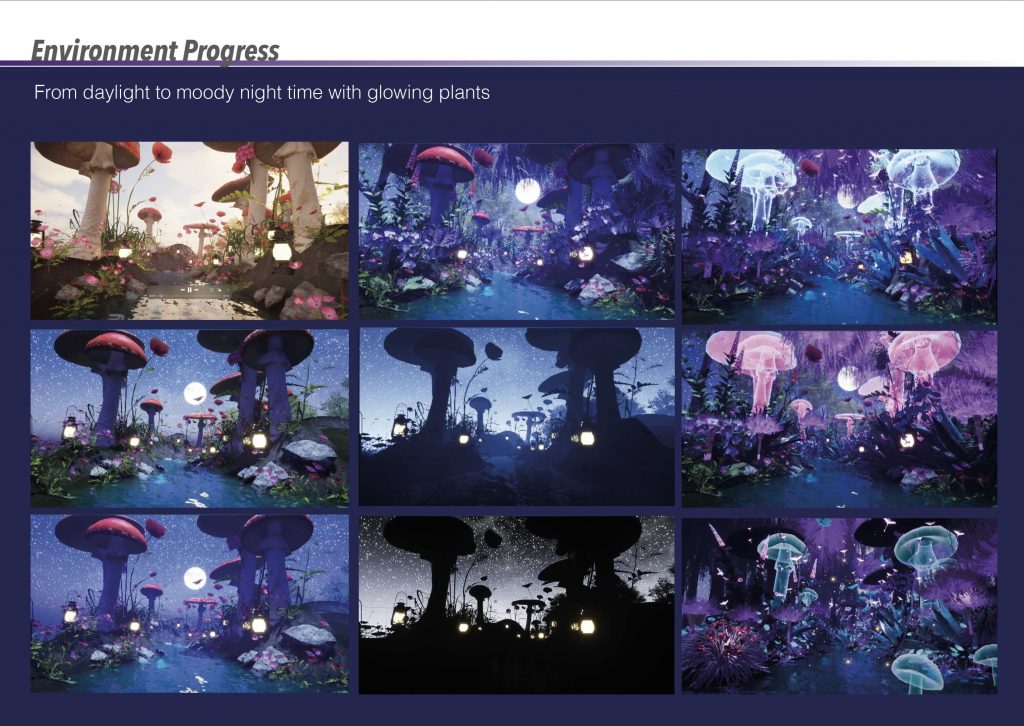
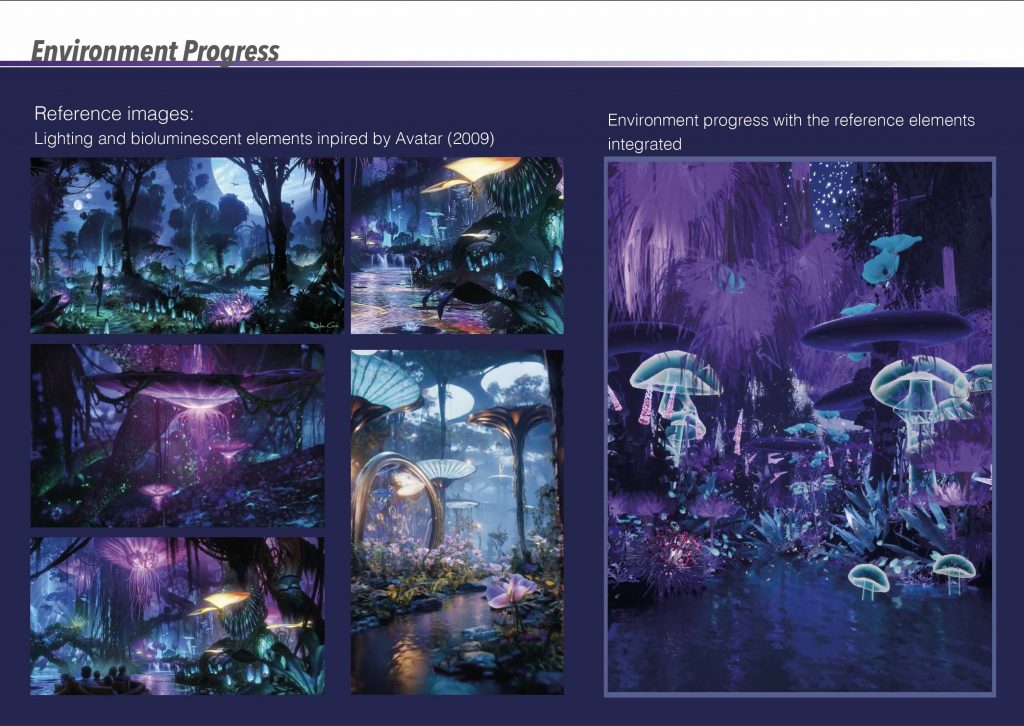
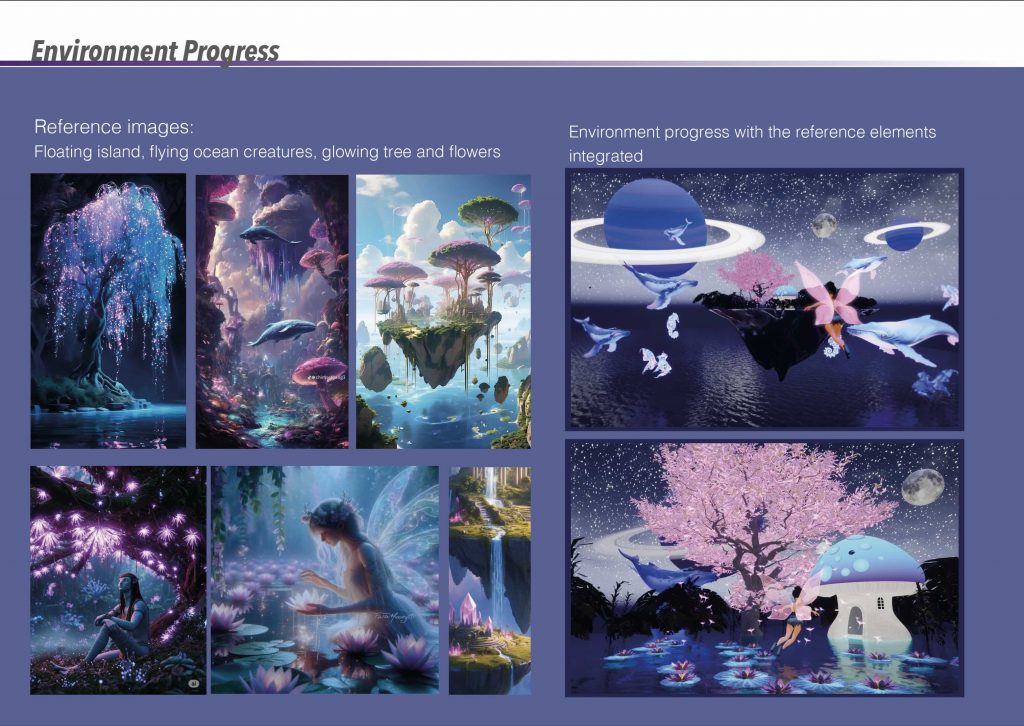
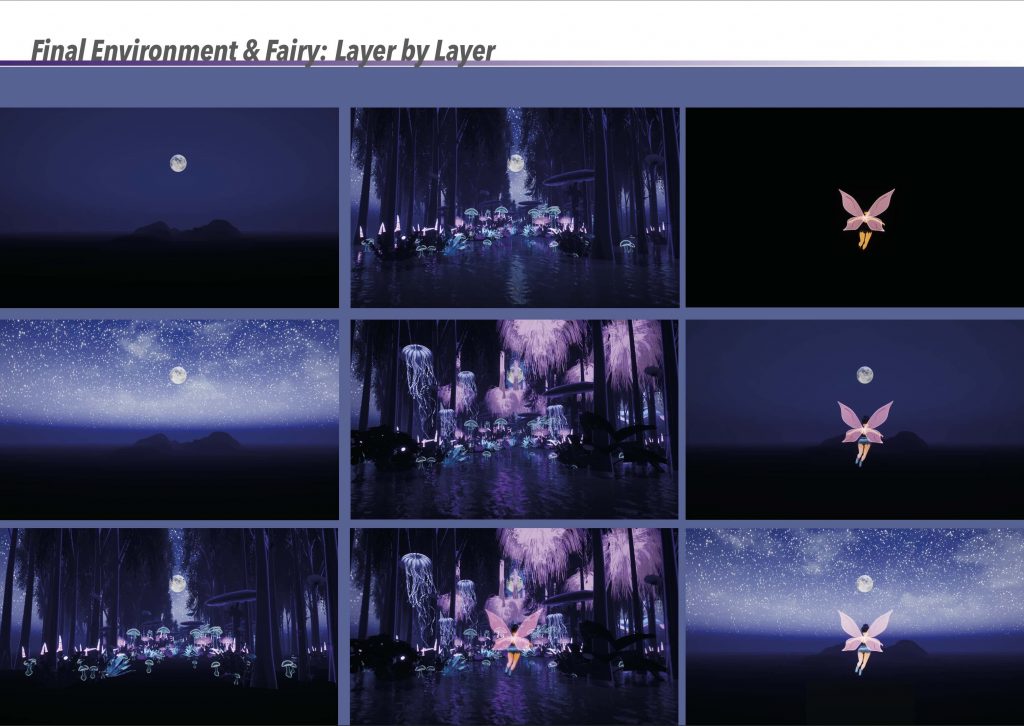
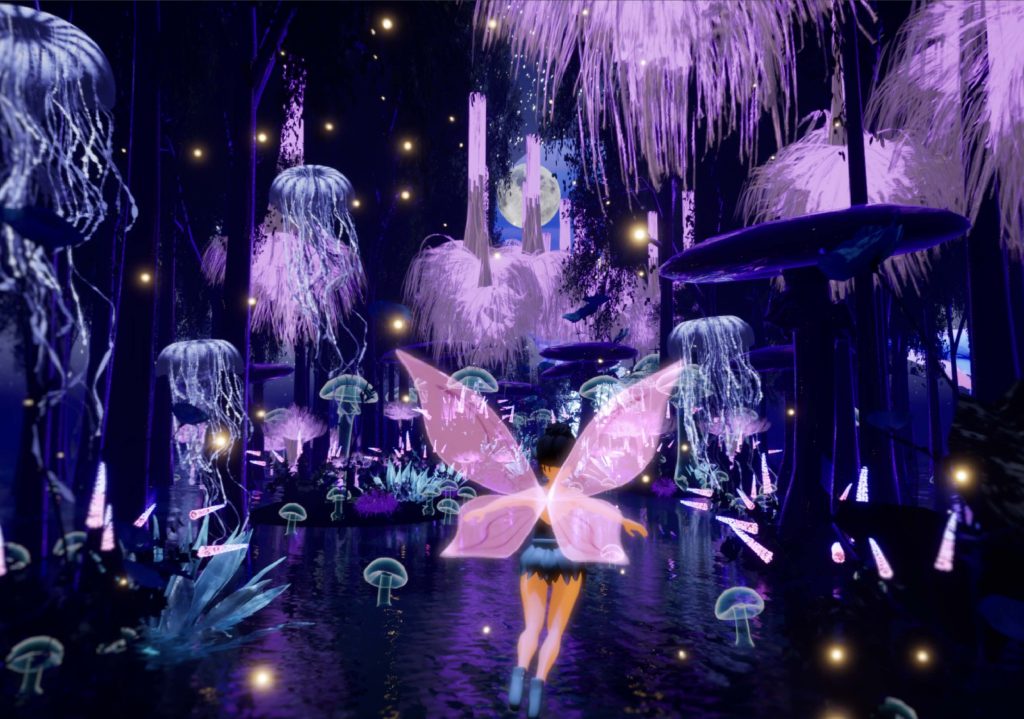
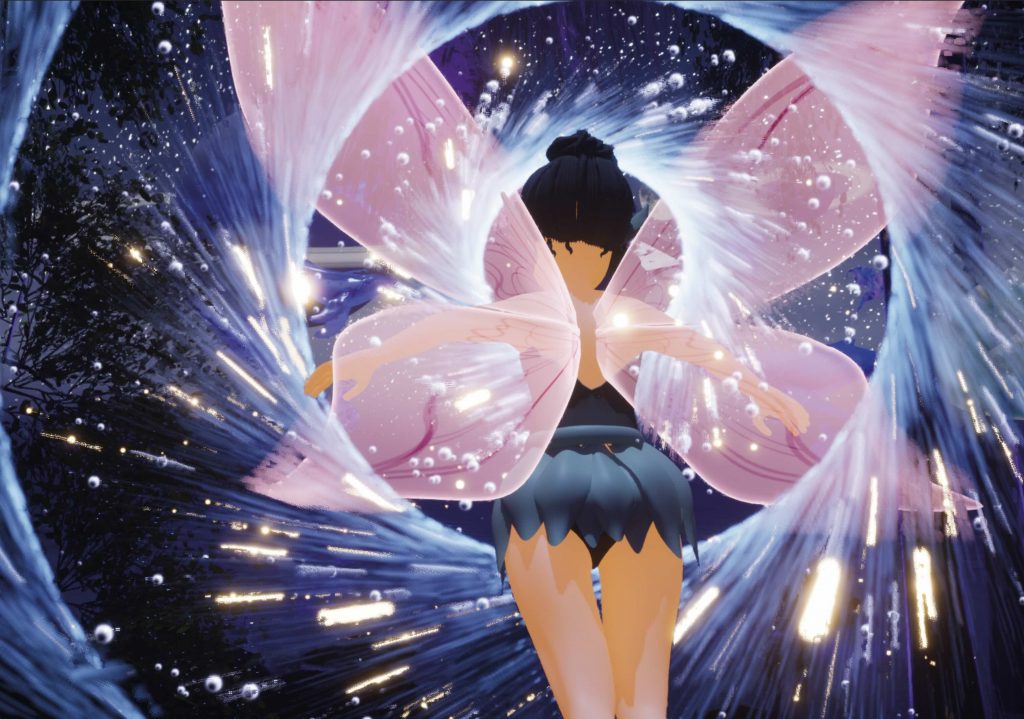
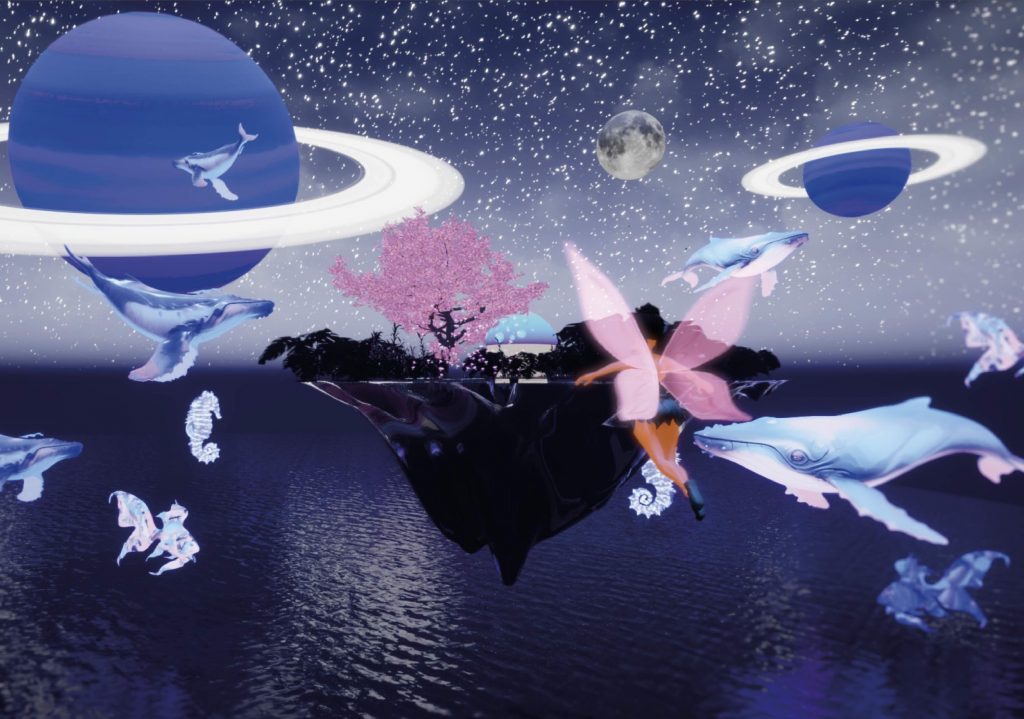
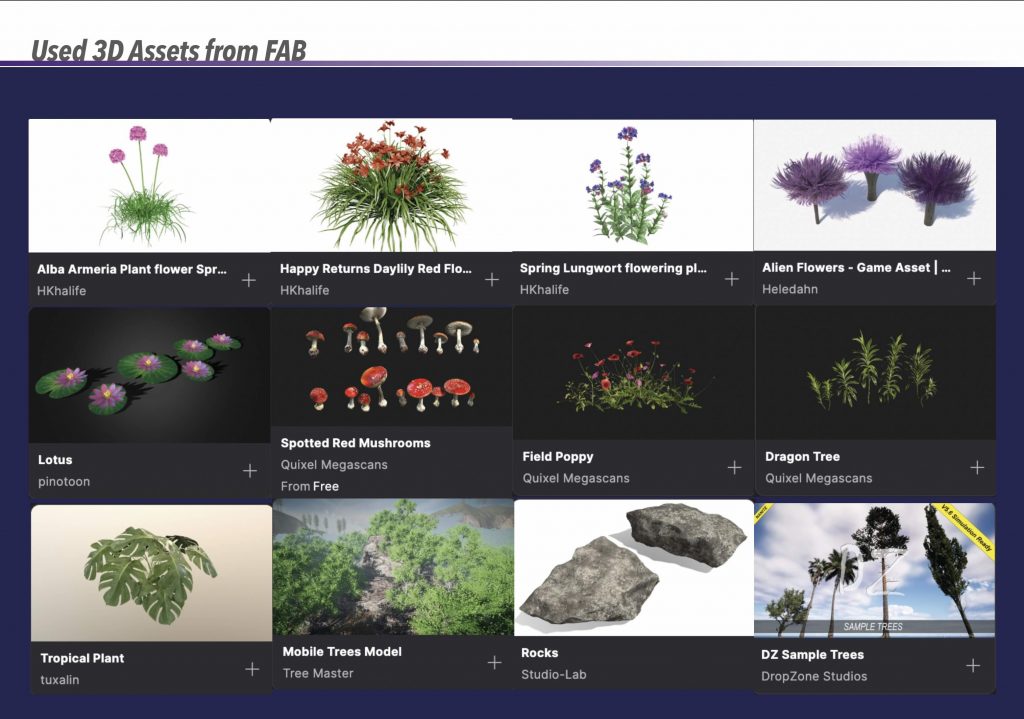
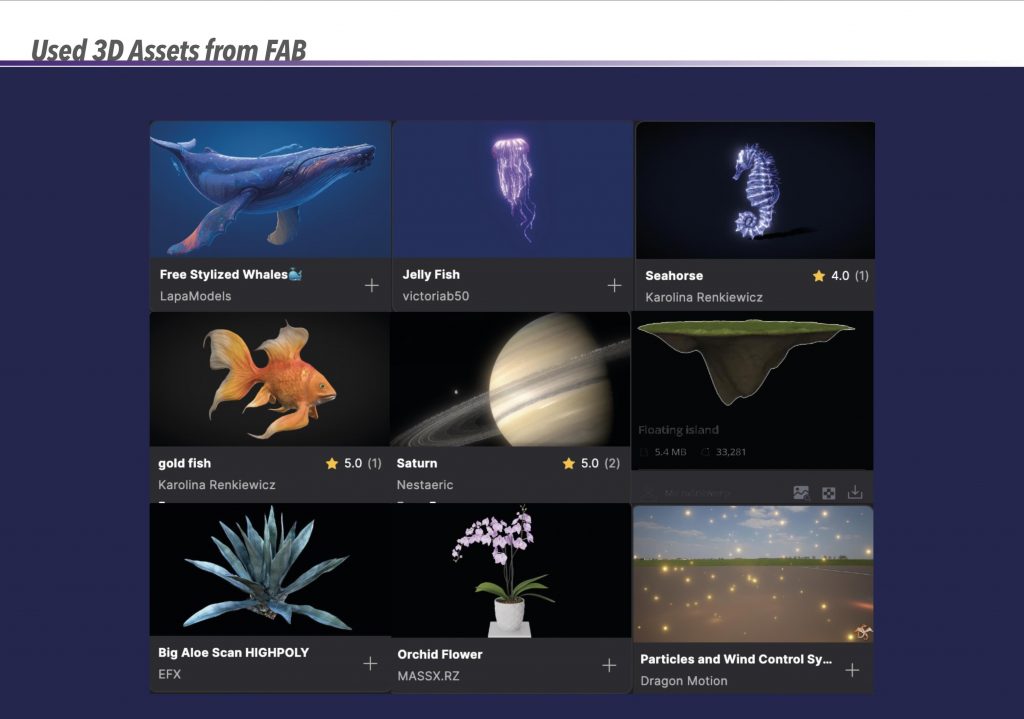
This stage shows the development of the fairy character, starting from a basic mesh and gradually refining the form. Several iterations were required to adjust proportions, facial features, and overall stylisation. Compared to environment assets, character modelling required a higher level of precision, making this one of the more challenging aspects of the project.My first approach to rigging involved manually creating joints for the character. Although I spent a significant amount of time attempting to refine this rig, it did not perform as expected. The joints did not deform correctly during movement, and the wings became distorted when the arms were animated. This made the rig unsuitable for animation and required me to reassess my approach.After the initial rigging attempt failed, I explored an alternative solution by combining two rigging methods. The body was rigged using Quick Rig, while the wings were rigged separately using a manual setup. Although combining these rigs presented technical challenges, this solution allowed me to move forward with animation and highlighted the importance of adapting workflows when initial methods are unsuccessful.Once the rigging was resolved, the fairy was animated into a flying position and imported into Unreal Engine. The animation was intentionally kept minimal, focusing mainly on wing movement to suggest motion. This decision allowed the character to support the scene without drawing attention away from the environment, which remained the main focus of the project.The mushroom house was modelled in Maya and textured in Cinema 4D before being placed into the Unreal Engine environment. Compared to the character work, this process was more straightforward and intuitive. The mushroom house acts as a focal point within the scene and reinforces the fairy-tale theme established at the beginning of the project.The environment was the central focus of this project and the area where I invested the most time. Throughout this stage, I experimented with terrain formation, asset placement, vegetation density, and water elements to create a cohesive and immersive space. Multiple versions of the environment were developed and refined, allowing me to gradually improve composition, depth, and visual balance.Lighting played a key role in shaping the final atmosphere of the environment. Inspired by bioluminescent environments such as those seen in Avatar (2009), I explored the transition from daylight to a moody nighttime scene. This involved experimenting with cooler and warmer light sources, glowing plants, and reflective surfaces. The final lighting setup helped enhance the magical quality of the environment and reinforced the shift in tone from my initial fairy-inspired references.This stage reflects how the environment evolved throughout the project rather than following a fixed plan from the beginning. Although the initial idea was to work with a daylight setting, continuous experimentation with lighting and colour led me to explore darker and more atmospheric alternatives. Over time, the night-time version became more visually engaging, allowing glowing plants, mushrooms, and lanterns to play a central role in shaping the scene’s mood and guiding the viewer’s eye.For the night-time lighting, I used reference images inspired by Avatar (2009), particularly the bioluminescent environments of Pandora. These references informed my approach to glowing vegetation, cooler colour palettes, and subtle light scattering. I focused on balancing fantasy and realism, ensuring that the glowing elements felt integrated into the scene rather than appearing overly artificial.Alongside the forest environment, I developed an additional world that introduces a change in scale and atmosphere. This space features floating elements, glowing floating animals, and surreal details that contrast with the grounded forest setting. Creating a second environment allowed me to broaden the visual scope of the project and suggest a transition between worlds, adding depth to the narrative without overcomplicating the animation.This section presents the environment in a simplified way to clearly explain how the scene is constructed. The environment was created and rendered as a single, complete setup in Unreal Engine, with the breakdown shown only for explanatory purposes and the fairy was the only element rendered separately.
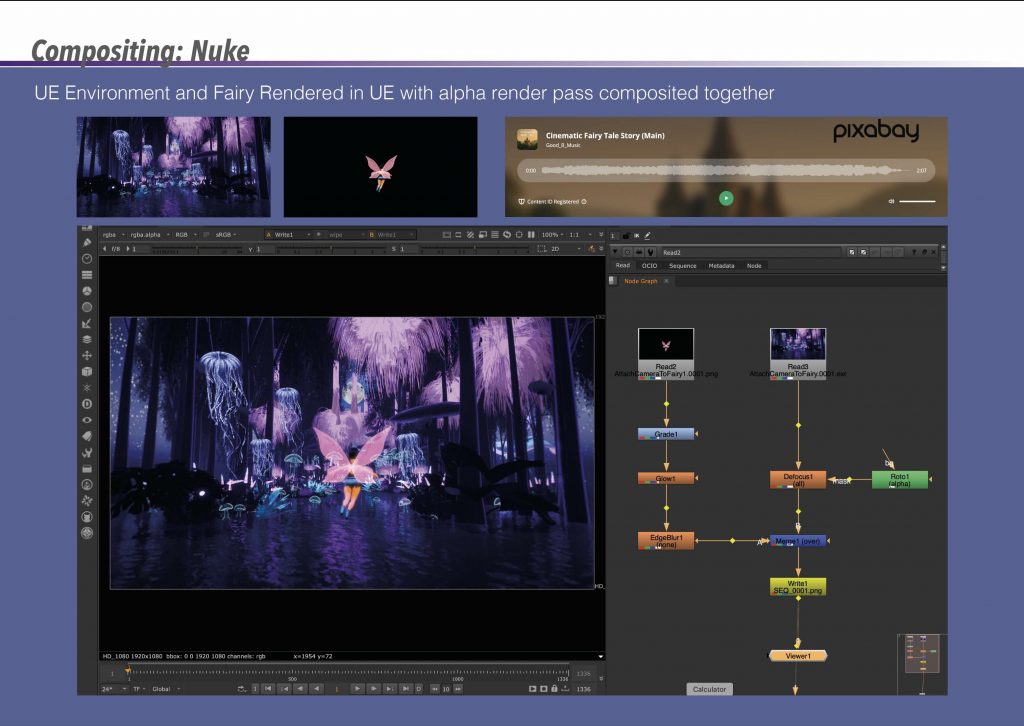
Once the renders were complete, the environment and fairy were composited together in Nuke using an alpha render pass. Basic colour grading, glow adjustments, and depth-based effects were applied to unify the elements visually. This process helped refine the final image and allowed me to enhance the fairy’s presence without overpowering the environment, which remained the primary focus of the project.
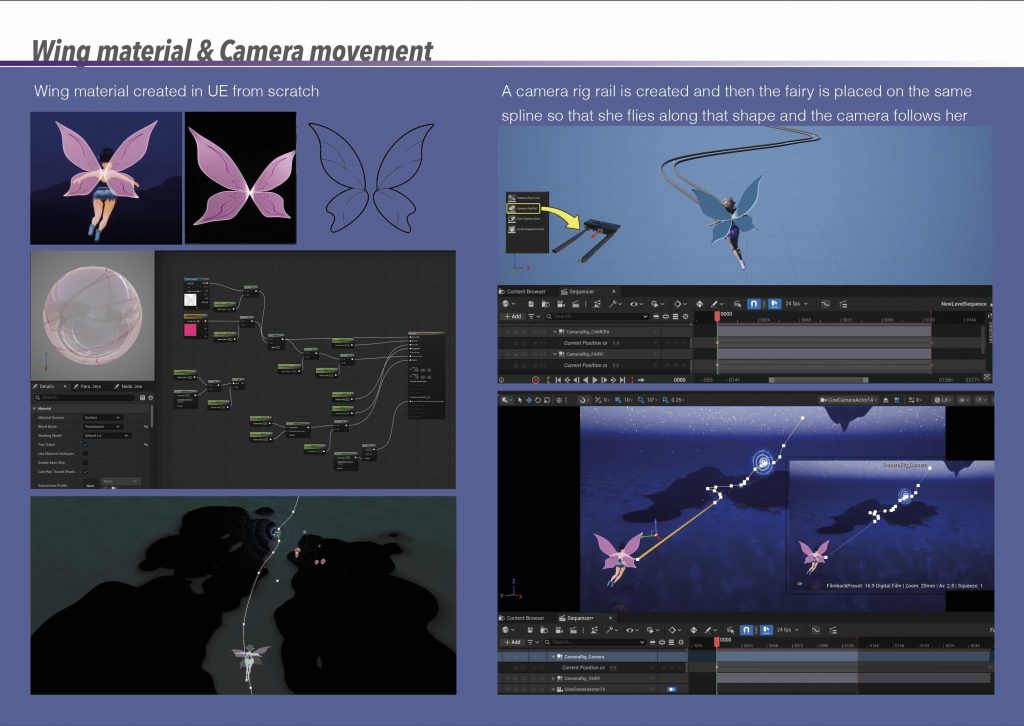
The fairy’s wing material was created from scratch in Unreal Engine using a translucent, glowing shader to complement the surrounding bioluminescent elements. To animate the sequence, a camera rig rail was used, allowing the fairy and camera to follow the same spline. This approach created smooth, controlled movement through the environment and reinforced the sense of flow and direction within the scene.
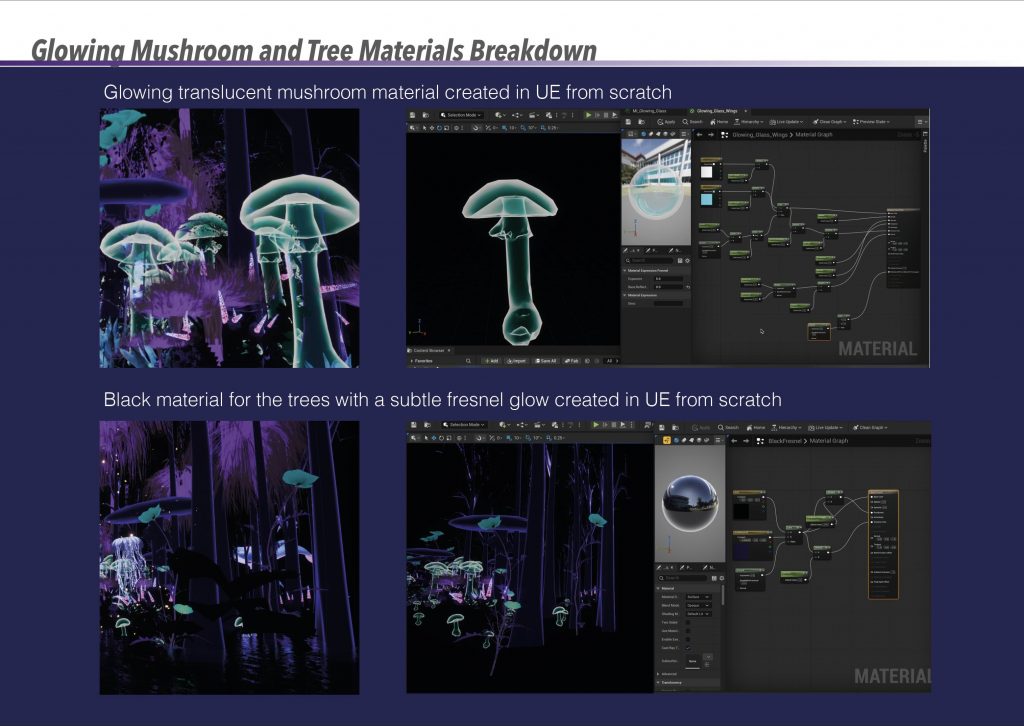
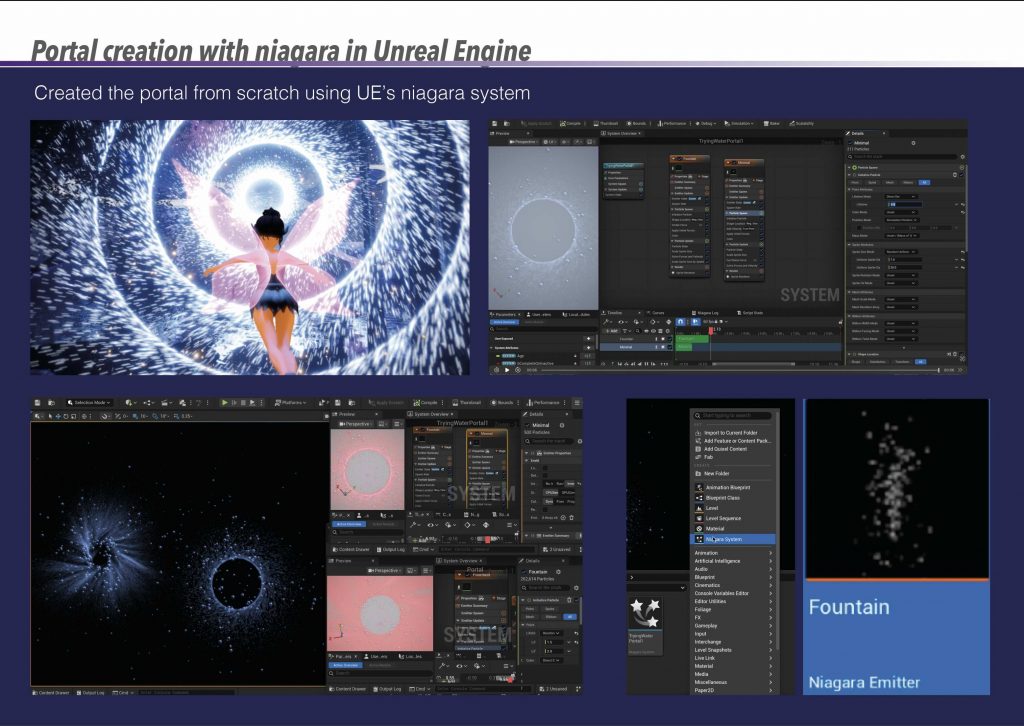
Custom materials were developed for both the glowing mushrooms and the trees. The mushroom material uses translucency and emissive values to create a soft internal glow, while the trees use a dark base material with a subtle Fresnel effect. These materials were essential in shaping the night-time atmosphere and helped establish visual contrast between illuminated and shadowed areas.The portal effect was created from scratch using Unreal Engine’s Niagara system. This involved experimenting with particle behaviour, motion, and light intensity to create a dynamic focal point within the scene. The portal introduces a moment of visual interest and narrative progression, suggesting a transition between worlds without relying on complex character animation.This section illustrates how the storyboard evolved throughout the project. The initial storyboard included a more detailed narrative, with plans to model the interior of the mushroom house and animate the fairy entering and interacting with the space. However, as the project progressed, I made a conscious decision to move away from interior scenes and focus primarily on the exterior environment. Having completed extensive interior-focused work during my BA, I felt it was more valuable at this stage to further develop my skills in environmental world-building, lighting, and atmosphere. As a result, the final storyboard was simplified to reflect an environment-led narrative, where the sense of journey and transition between spaces became more important than detailed interior animation.
Leave a Reply